

18,300 Michigan households could pay more under proposed education tax hike
New tax could push state to fourth-highest income tax rate behind California, New York and Oregon


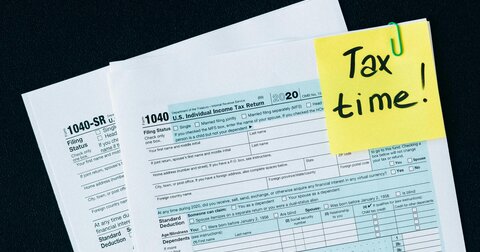
Michigan could assess some of the highest income tax rates in the country under a proposal that would cause about 18,300 households to send more money to public schools, according to IRS data.
The tax increase would mean that only California, New York and Oregon have a higher tax rate for the highest earners, James Hohman, fiscal policy director at the Mackinac Center for Public Policy, told Michigan Capitol Confidential.
“Michigan currently charges a 4.25% income tax on all income,” he told CapCon in an email. “The proposal would create a new tax bracket and charge its taxpayers another 5%. In addition, Michigan allows local governments to assess income taxes. This means that high-earning taxpayers in Detroit would be subject to 48.65% tax rates when including federal, state and local income taxes. Taxpayers in Grand Rapids would be subject to 47.75% in income taxes.”
The group behind the proposal to add another tax bracket to the Michigan tax system, Invest in Mi Kids, must collect 446,000 valid signatures within 180 days to place its plan on the November 2026 general election ballot.
The proposal aims to amend the Michigan Constitution, which requires any state income tax to be set at a single rate. Under the proposal, the rate would go up for single filers who report more than $500,000 in income and joint filers who report more than $1 million in income.
The number of high earners in the state more than doubled over the decade.
Gov. Gretchen Whitmer signaled her dissatisfaction with public education in her 2025 State of the State address. “We spend more, and we get less,” she said, as CapCon reported in March.
In her speech, Whitmer said that just 24% of fourth graders can read proficiently and that 24% of eighth graders are proficient in math.
“It’s not acceptable,” Whitmer said. “For our kids, let’s do better. Let’s face our literacy crisis with fierce urgency.”
Molly Macek, education policy director at the Mackinac Center, says schools are not underfunded.
“Districts have already received record funding over the past several years, yet student performance has placed Michigan in the bottom 10 among the states.”
A shortage of resources is not the problem, Macek said. The state needs more policies that hold schools accountable and give them incentives to improve, she added.
Michigan Capitol Confidential is the news source produced by the Mackinac Center for Public Policy. Michigan Capitol Confidential reports with a free-market news perspective.
 Dearborn voters to decide fate of $1.5B bond proposal Nov. 3
 Michigan school funding tops inflation since before the pandemic
 Michigan spends record amount on schools, gets worse reading scores