


Criminals hijack IDs to pose as grocery stores in food stamp scam
Crime ‘nearly impossible to trace’


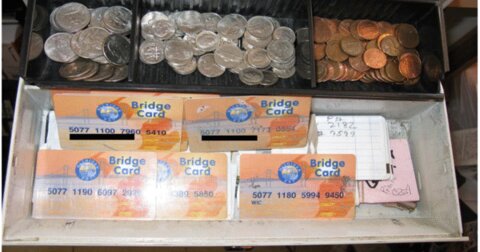
Michigan’s top health official has urged the federal government to overhaul the data processing security in the food program that feeds 1.4 million Michiganders.
Around 235 fraudulent merchants have hijacked retailer credentials to steal millions in benefits since August 2024, Michigan Health Department Director Elizabeth Hertel wrote in a May 23 letter to Brooke Rollins, secretary of the United States Department of Agriculture.
Criminals buy stolen electronic benefit transfer data from cloned cards and then swipe those cards into counterfeit point-of-sale terminals to steal, according to the letter that Michigan Capitol Confidential obtained the letter through a records request.
“Once a (counterfeit) terminal is activated, investigators face overwhelming obstacles in detection and prevention, as the scheme is designed to evade traditional oversight,” Hertel wrote to Rollins.
Using stolen or cloned Bridge Card data, criminals run transactions that appear to come from legitimate stores such as Walmart or Kroger, Haywood Talcove, CEO of LexisNexis Risk Solutions, told Michigan Capitol Confidential in an email.
“That creates a huge vulnerability: criminals simply take those numbers, program them into cloned or counterfeit point-of-sale terminals, and —thanks to corrupt third-party processors — make it look like they’re an authorized grocery store,” Talcove said.
A change in the 2014 farm bill stripped the U.S. Department of Agriculture of its authority over who could issue sale terminals and which third-party processors participate in the Supplemental Nutrition Assistance Program. This removed oversight from the program, Talcove said.
“Today, there is no real verification step to confirm that the person setting up a terminal actually owns the FNS (retailer) number they’re using,” Talcove said. “The result is a system that’s being gamed by organized criminals at scale.”
He estimates that lax controls cost taxpayers $18 billion annually.
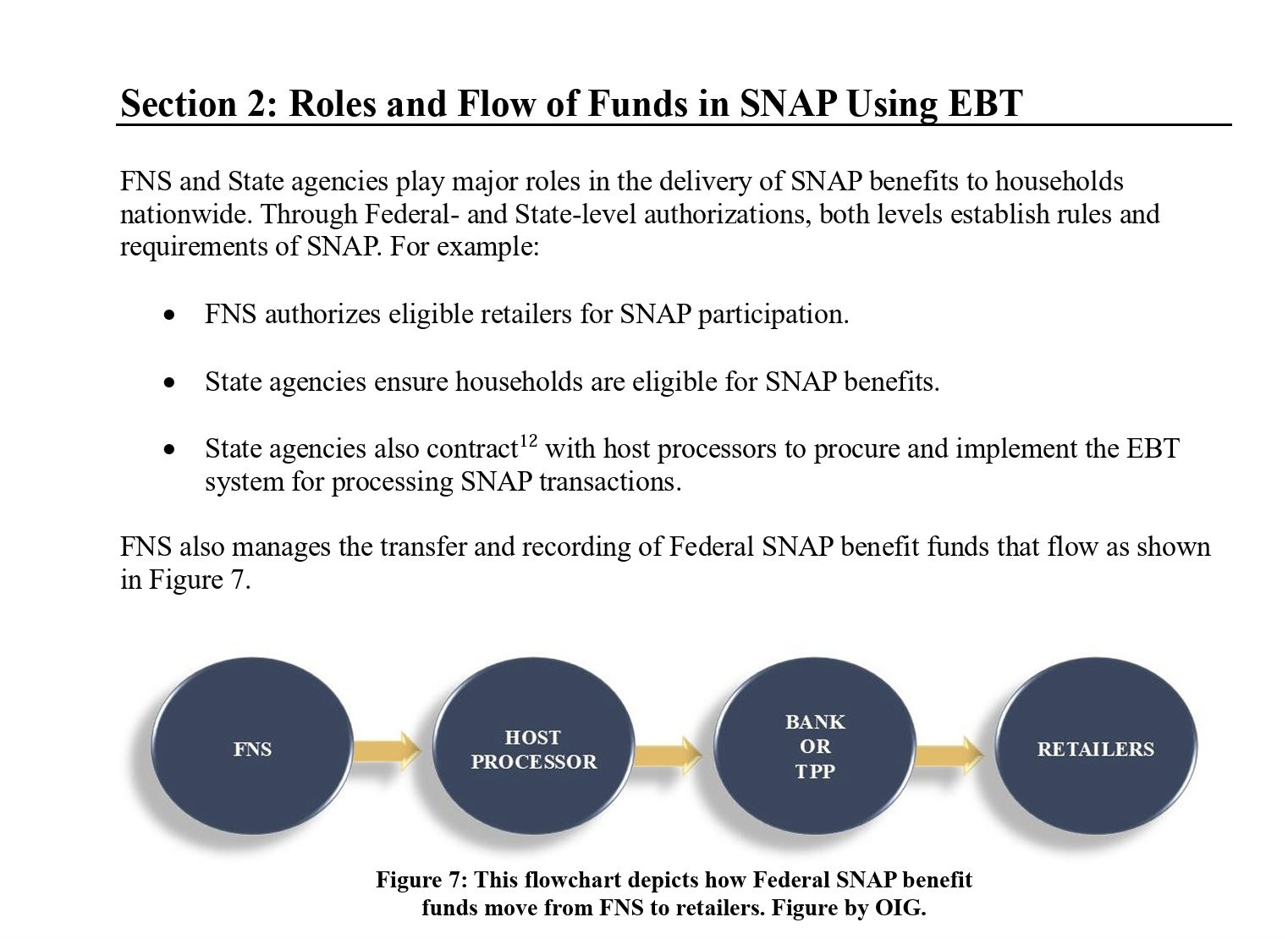 An April 2025 report from the USDA explains how the SNAP program works.
For years, criminals have skimmed electronic benefit transfer cards, including Michigan’s Bridge Cards, but the scam involving retailer ID numbers is “nearly impossible to trace,” Michigan’s health department chief wrote to the U.S. agriculture secretary.
Stopping SNAP Theft Strengthening Protections Against Terminal Cloning and Trafficking 5.12.25 by mcclallen
Media outlets have reported on this type of fraud since 2023.
Last year, SNAP fraud cost Michigan at least $14 million, Michigan Capitol Confidential reported.
In 2024 alone, Michigan replaced more than 269,000 lost, stolen or compromised Bridge Cards, allowing up to four replacements per household before it requires an explanation.
The state health department suggested using a multi-factor authentication process to ensure that only the original merchant can set up more terminals using their assigned ID number, establishing an email address or contact person at the federal government for third-party processor inquiries, and allowing participating states to collaborate with third-party processors to confirm an ID number inquiry by yes/no response.
The state health department hasn’t responded to multiple requests for comment.
Michigan Capitol Confidential is the news source produced by the Mackinac Center for Public Policy. Michigan Capitol Confidential reports with a free-market news perspective.
 Michigan refuses to share food stamp data with feds — and it could cost taxpayers $300 million
 Michigan could be first Midwest state to upgrade SNAP cards
 Michigan House approves adding chips to SNAP cards