


Michigan faces $415M bill for botched benefit errors
SNAP benefits feed 1.4 million Michigan residents each month


Michigan will repay around $415 million to the federal government because the state’s largest agency struggles to disburse benefits accurately, Rep. Jason Woolford, R-Howell, told Michigan Capitol Confidential in a phone interview.
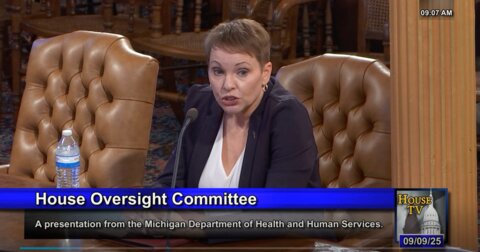
Woolford, the chair of the House Oversight Committee, pressed Elizabeth Hertel, the director of the Michigan Department of Health and Human Services, in a hearing on Sept 12.
Woolford pointed to systemic problems with how the department administers safety net programs such as the Supplemental Nutrition Assistance Program (food stamps); Medicaid; Medicare Savings Program; Women, Infants and Children; and the Family Independence Program. In fiscal 2024 alone, Michigan spent more than $35 billion on health and human services, or more than half its budget.
Woolford has introduced two bills to curb rampant SNAP fraud. Approximately 1.4 million state residents people rely on SNAP.
House Bill 4746 would require Bridge Cards, which enrolled individuals can use to buy food or obtain cash benefits, to include secure chip technology. The change would replace cards that use easily skimmed magnetic strips.
HB 4515 would require each Bridge Card to have the photograph and signature of any adult qualified to use it, in an attempt to prevent unauthorized transactions.
Together, the bills respond to a 387% increase in SNAP fraud from 2023-2024, which CapCon has reported on in recent weeks. In 2024 the state health department sent 738 replacement Bridge Cards each day, for a total of more than 269,000 cards during the year.
Woolford has criticized the health department over the error rate of its food stamp program, including how often it overpays and underpays recipients.
For years, Michigan’s error rate has fluctuated. In fiscal year 2022, it was 13%. The next year, it dropped to 10%, and this year it’s 9.53%.
Under the new federal One Big Beautiful Bill, states with a payment error rate over 10% must repay money to the federal government, Woolford told CapCon.
“This government continues to grow under Democrat leadership,” he said of Michigan. ”They’re not properly paying people.”
In 2025 so far, the agency has distributed:
- $43.7 million in Family Independence Program cash assistance to 47,174 people
- $3.1 million in state disability insurance to 3,659 people
- $11.3 million in state funding for the Family Independence Program
- $1.8 million in Refugee Cash Assistance to 1,270 people.
In total, the state has already handed out more than $60 million in cash assistance to over 64,000 people this year.
By comparison, in 2024 Michigan distributed nearly $100 million in cash to 74,667 people through various programs.
The Family Independence Program gives cash to families with children. Recipients can get cash assistance for up to 60 months.
Woolford argues that if the human services department cannot accurately disburse food stamp benefits, the same problem likely plagues its cash assistance programs.
“You can imagine if it’s happening there, then it’s definitely happening in the cash assistance program as well,” Woolford said. “And this is something that we will be looking into.”
The state health department has nearly 16,000 employees, according to Mackinac Center for Public Policy research. It hasn’t responded to over a dozen requests for comment.
Earlier this year, a state health department worker was fired after reporting her colleagues for stealing SNAP benefits. The whistleblower, not the alleged thief, was fired, according to a lawsuit.
The Refugee Assistance Program is federally funded, as are many parts of the state human services department. Temporary refugee cash assistance is available to eligible refugees who do not qualify for cash assistance through the Temporary Assistance for Needy Families program, Supplemental Security Income or Medicaid.
Woolford said that the state health department is too big.
“We’ll be looking into possibly breaking that department up, and doing it for the sake of the people who deserve these benefits,” the Republican from Howell said. “[Hertel’s] managing people who she’s not holding accountable to the point that it’s costing hundreds of millions of dollars to you and I and taxpayers, and that’s not fair.”
Michigan Capitol Confidential is the news source produced by the Mackinac Center for Public Policy. Michigan Capitol Confidential reports with a free-market news perspective.
 Show your work: Bill would force Michigan to open its SNAP books
 Michigan’s SNAP administration costs to jump $94 million as feds shift burden to states
 Michigan lawmakers eye separating legal SNAP spending from fraud