


Michigan Tech scores No. 4 rank for free speech on campus
Tech scores a ‘C,’ five universities in Michigan merit an ‘F’


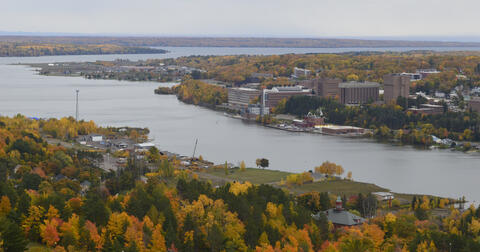
Michigan Technological University stood out in a newly released report on free speech on university campuses, coming in as having the fourth-best climate in the nation for speech. That’s according to a report from the Foundation for Individual Rights and Expression, or FIRE.
FIRE evaluated seven universities in Michigan, with Michigan Tech scoring 76 points out of a possible 111, giving it a “C.” Of the other six institutions, Michigan State University did marginally better than a failing grade, achieving a 62, or a “D-“ for its record:
- Central Michigan University: 55 (F)
- Eastern Michigan University: 58 (F)
- Michigan State University: 62 (D-)
- Michigan Technological University: 76 (C)
- University of Michigan: 59 (F)
- Wayne State University: 58 (F)
- Western Michigan University: 56 (F).
Most universities in the national ranking — 166 out of 257 — received an “F.” Only 11, including Michigan Tech received a “C” or better.
Michigan State, the University of Michigan, Western Michigan and Michigan Tech were all noted for having adopted at least one pro-speech policy, though all were downgraded for other factors.
The University of Michigan rose 80 places from last year’s ranking by adopting a position of institutional neutrality. Michigan State rose 115 places. Wayne State fell 88 spots after administrators stopped a pro-Palestinian vigil they had previously approved.
Each university was evaluated on 12 measures. Six of those involved student perceptions of their university’s climate for speech. Three involved official campus policies and three looked at how campus administrators acted.
More than 68,000 students were selected to participate, with survey designers attempting to draw a nationally representative sample. Students were asked several questions, including the degree to which they practice self-censorship. They also were also given various positions on current hot-button issues and asked whether individuals who expressed those views should be allowed to speak in a public forum. Three out of four Michigan students surveyed said it was permissible under some circumstances to shut down or prevent a speaker from addressing a campus event, depending on that person’s viewpoint.
The FIRE rankings also consider a university administration’s response to attempts to silence students, faculty or artwork for politically unpopular speech or other communications. It gives penalty points or bonus points, depending on the response.
A university could earn points by adopting the Chicago Statement on speech. It could also get bonus points for adopting a stance of institutional neutrality. In 1967 the University of Chicago published a document on institutional neutrality, saying there should be “a heavy presumption against the university taking collective action or expressing opinions on the political and social issues of the day.” The American Association of Professors downplays the value of institutional neutrality, saying it neither necessary for academic freedom nor incompatible with it.
The Great Lakes region was represented at both the top and bottom of the FIRE rankings of free speech environments. Joining Michigan Tech in the top 10 were Purdue University (2) and the University of Chicago (4). Not all Midwestern institutions scored so highly, however. Indiana University came in at 255 out of 257.
Michigan Tech has appeared at the top of the rankings for four years running. “The fact that it's been near the top spot every year we've included it in the rankings is extremely impressive,” Ryne Weiss, director of research at FIRE, told Michigan Capitol Confidential in an email.
A spokesperson for Michigan State University told CapCon in an email that freedom of expression is critical to achieving MSU’s goals of world-class education, innovation and service. “That is why MSU makes available online resources in support of freedom of speech, and has adopted guidance like institutional restraint in support of the university’s commitment to serve as a forum for civil and respectful debates, not proponents within them.”
A spokesperson for Central Michigan University acknowledged a request CapCon sent via email for comment, but said the university had no comment to offer. The other universities did not reply to emailed requests for comment.
The number of participating students in Michigan institutions varied from 160 (Michigan Tech) to 332 (University of Michigan).
Michigan Capitol Confidential is the news source produced by the Mackinac Center for Public Policy. Michigan Capitol Confidential reports with a free-market news perspective.