


SNAP pays more than $4M in benefits to out-of-staters
Facing seven-digit improper payments since 2024, Michigan lawmakers pass bill aimed at tightening oversight


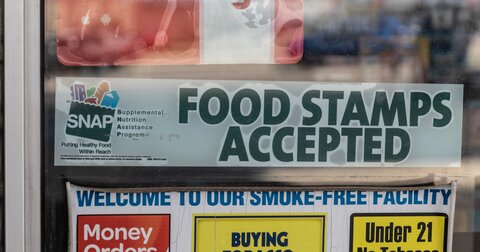
Michigan has paid more than $4 million in its Supplemental Nutrition Assistance Program to people with out-of-state addresses since 2024, according to a document Michigan Capitol Confidential obtained through a records request.
SNAP recipients are required to live in Michigan, but the state from 2024 through 2026 awarded funds to people who live out-of-state, the unreported document from the Michigan Department of Health and Human Services states.
In 2024, Michigan spent $1.6 million across 2,663 cases of out-of-state payments for SNAP benefits. In 2025, it paid $1.9 million across 3,177 cases, and in 2026 through April 5, it has paid $452,986 across 929 cases.
.png)
Michigan has refused to share SNAP data with the federal government. Given the state’s 9.53% payment error rate, the decision could cost taxpayers $300 million in fiscal year 2028.
The Michigan House of Representatives passed House Bill 6013 on June 3. The bill, if passed by the Senate and signed into law, would direct the state health department to monitor instances of out-of-state Bridge Card use. The SNAP program helps feed about 1.3 million Michiganders (as well as the several thousand non-residents as reported in the Health and Human Services document) monthly.
If the department finds that a Bridge Card was used out-of-state for more than 90 consecutive days, the House bill says, the department shall suspend the Bridge Card until the recipient verifies continued state residency or benefit eligibility.
The bill aims to hold Michigan’s SNAP program and state health department accountable, the bill’s sponsor, Rep. Jason Woolford, R-Howell, told CapCon in an email.
“This bill is about basic accountability in a program meant for Michigan residents,” Woolford wrote. “The state already has data showing when Bridge Cards are used out of state for long periods, but it isn’t consistently used to verify eligibility. This bill simply requires (the health department) to act when there’s continuous out-of-state use, and pause benefits until residency is confirmed. It doesn’t change who qualifies, it just ensures the rules are enforced.”
Last week, the U.S. Department of Agriculture subpoenaed four states that refuse to share SNAP data with the federal government: California, Illinois, Michigan, and New York.
States and the federal government must work together to stamp out fraud, the agency said in a June 4 news release.
“Distributing SNAP food assistance is a shared responsibility between USDA and state agencies who administer benefits to local residents,” USDA Inspector General John Walk said. “We have a shared obligation to root out program fraud so that assistance is not stolen and reaches Americans who depend on SNAP.”
USDA Inspector General Issues Subpoenas to Four States for SNAP Data
— USDA OIG (@OIGUSDA) June 5, 2026
U.S. Department of Agriculture (USDA) Inspector General John Walk issued subpoenas to the state agencies that administer federal Supplemental Nutrition Assistance Program (SNAP) funds in California, Illinois,… pic.twitter.com/nJBHN5osL9
House Bill 6013 responds to a spike in SNAP fraud in recent years. A CapCon investigation spanning 26 stories over two years found that SNAP fraud in Michigan increased by nearly 400% between 2023 and 2024.
Most of the fraud in Michigan’s SNAP program occurs out-of-state, according to more than 500 pages of police reports obtained by CapCon. Criminals steal SNAP benefits and spend them in New York, Maryland, Florida, or Texas, while victims have no recourse. Local governments can’t chase out-of-state crime. Federal officials say they need access to states’ data on improper payments in order to look for fraud.
The state health department, which administers SNAP in Michigan, did not respond to multiple requests for comment.
Michigan Capitol Confidential is the news source produced by the Mackinac Center for Public Policy. Michigan Capitol Confidential reports with a free-market news perspective.
 93 Oakland County residents reported SNAP fraud to sheriff’s office in 2023
 Michigan refuses to share food stamp data with feds — and it could cost taxpayers $300 million
 Enhanced SNAP cards pay for meals at KFC, Taco Bell, McDonald’s