


Ann Arbor pours millions into 262-home neighborhood to go ‘carbon neutral’
Federal, state and local dollars fund Bryant makeover


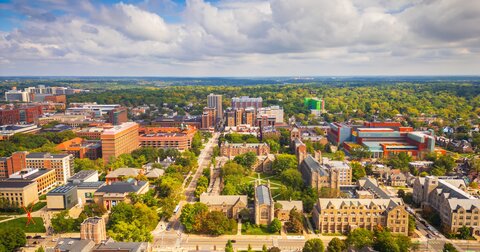
The city of Ann Arbor has set a goal to have the first neighborhood in the country to be carbon neutral, meaning the neighborhood won’t produce in aggregate greenhouse gas emissions.
Ann Arbor is committing millions of dollars in federal, state and local tax funding to transform its Bryant neighborhood. City officials hope it will become one of the nation’s first carbon-neutral neighborhoods.
The Bryant neighborhood sits in a floodplain bordered by a landfill and I-94.
Public funding includes nearly $10.8 million from the U.S. Department of Energy for geothermal heating and cooling, a $3.1 million Michigan grant to improve 50 homes, and a separate $5 million state award supporting a solar power pilot and the city’s Sustainable Energy Utility. Local property taxes will fund neighborhood outreach.
Ann Arbor began installing solar panels and battery storage systems on homes in its Bryant neighborhood on May 18 as part of a publicly funded pilot project. The city said about 100 homes were slated to receive systems before the pilot ends in 2026.
The McKnight Foundation is one of the nonprofits that have also pledged financial support.
The city of Ann Arbor did not respond to an email seeking comment.
The geothermal project carried an estimated $22 million price tag in the city’s grant application. That proposal covered an underground well field and pump house sized for the neighborhood’s 262 homes and road work and home conversions for just over 100 households.
One estimate puts the cost of the geothermal project, including home retrofits, at $34.4 million to serve nearly all 262 homes in Bryant, according to the Building Decarbonization Coalition.
City council members approved terms of the federal grant in October 2025. The city subsequently said it would finance approximately $11.1 million in additional funding. The council memorandum, however, said the city still needed financing, with potential financing partners to be evaluated through a competitive process.
The system would become a city-owned asset operated by the Sustainable Energy Utility. Individual buildings would use geothermal heat pumps connected to a shared underground loop. The city’s stated goal is to have the system working in 2028.
Separate state funding is paying for upgrades inside Bryant homes.
In November 2024, the City Council accepted $3,115,600 from the Michigan Public Service Commission to improve up to 50 income-qualified homes. Eligible work includes energy-efficiency improvements, electrical panel upgrades, electric appliances, solar panels and battery storage. The grant excluded heating and cooling upgrades because the city was pursuing the geothermal grant.
The grant’s stated goals included reducing participating households’ energy spending and annual greenhouse gas emissions by 50% from baseline levels by August 2026.
Local taxpayers are financing additional support through Ann Arbor’s Community Climate Action Millage, which voters approved in 2022. In October 2025, the city council authorized a contract of up to $300,000 with Community Action Network for engagement, outreach and general support through June 2028.
City officials say the investments will reduce energy costs and emissions.
Michigan Capitol Confidential is the news source produced by the Mackinac Center for Public Policy. Michigan Capitol Confidential reports with a free-market news perspective.
 Feds give Ann Arbor Schools 14 days to fix alleged parental rights violations
 Ann Arbor mulls green energy mandates as housing costs soar
 Ann Arbor installing 4,768 solar panels on city buildings