


District health department brews up food license dispute with youth group
State regulations appear to allow Youth for Christ to offer coffee and cocoa at private meeting


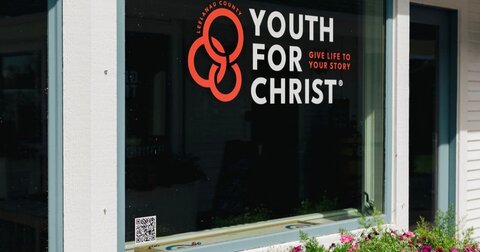
The Benzie-Leelanau District Health Department told a youth group meeting in a private building that it violated food licensing rules by offering hot chocolate and coffee without a license.
Language on the website of the Michigan Department of Agriculture and Rural Development appears to challenge the district’s claim.
Micah and Kya Cramer, Apollos Properties LLC and the family that controls the LLC filed a lawsuit on August 10 in federal district court against Leland Township and 21 local officials. The complaint alleges that the township and local officials violated the plaintiff’s federal and state constitutional rights and various laws. Apollos owns the building used by the local chapter of Youth for Christ.
The lawsuit also states that Nicholas Dow, food program coordinator of the Benzie-Leelanau District Health Department, alleged that the youth group violated the law by offering hot chocolate and coffee to attendees of the private function without a license.
“Nicholas Dow said Youth for Christ Club needed a license to serve snacks such as hot chocolate and coffee at their meetings and said Youth for Christ Club and Apollos must pay a fee to be granted a license to serve coffee and hot chocolate,” states the lawsuit.
But licensing rules on the website of the Michigan Department of Agriculture and Rural Development indicate that these meetings are exempt.
“A food establishment license is required in almost all instances where food is commercially handled or served to the general public. Even the giving of food to the general public is included,” a now-deleted page on the departmental website reads.
The meeting that Dow observed didn’t require a food establishment license and beverages weren’t provided to the general public, Dow told Michigan Capitol Confidential in an email.
“In response to the complaint, I visited the location to review the food service activity and determine whether the operation was subject to Michigan food establishment licensing requirements,” said Nick Dow in an email to CapCon.
Based on what I observed at the time of the visit, added Dow, the activity was associated with a private meeting, and the beverages were not being provided to the general public as part of a food service operation.
“Accordingly, the activity I observed did not require a food establishment license under the circumstances, and no enforcement action was taken,” stated the program coordinator.
He noted that the Michigan Food Law requires local health departments to maintain records of consumer complaints, the ensuing investigation, and the result of the complaint.
“My purpose in responding to the complaint was to assess the circumstances and provide guidance regarding applicable food licensing requirements,” he concluded.
Micah Cramer, leader of the local Youth for Christ chapter, told CapCon in a phone interview that Dow’s recollection of events does not match his.
Cramer said the only time they actually met in person with Dow was when they acquired a temporary food license for a Youth for Christ fundraiser.
He noted that someone called the health department and complained they were handing out coffee and hot chocolate at a club meeting in the private building without a permit.
Even after the youth group leader explained to Dow over the phone that they offered packaged snacks and coffee and hot chocolate for attendees, Dow, according to Cramer, said it was not allowed without a license and therefore an issue.
Cramer noted that Dow said he did not want to be a hindrance and offered to meet at the location and the group would be required to pay $200 to apply for a license.
The agriculture department states on its website that several types of entities are exempt from licensing:
-
Temporary establishments that do not prepare food but use single-service articles and serve only food or beverages that are not potentially hazardous. It lists as examples beer tents, soft drink stands, or snack bars at school sporting events.
-
Bake sales or potlucks run by a charitable, religious, fraternal or other non-profit organization and serving only home-prepared foods.
-
Non-profit cooperatives.
Michigan Capitol Confidential is the news source produced by the Mackinac Center for Public Policy. Michigan Capitol Confidential reports with a free-market news perspective.
 Leland Township sued after denying Christian youth group use of privately owned meeting space
 Lawsuit alleges Leland Township violated federal religious protection laws
 Michigan to bite hand that fuels it