


Michigan needs to spend $1B on EV chargers, study says
State has 82,000 registered electric vehicles


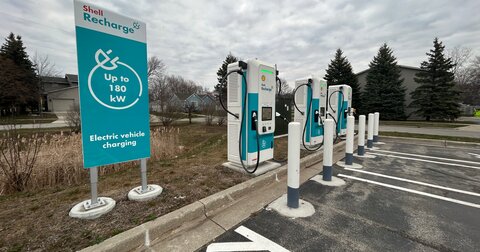
When you’re driving an electric vehicle, you may worry about where the next charger is. Researchers at Michigan State University say a solution to that is possible, at a cost of nearly $1 billion.
It costs between $50,000 and $80,000 to build a single charger, according to a 53-page taxpayer-funded study, which says the state needs to spend $1 billion on about 97,000 electric vehicle chargers. The report did not look at chargers in single family homes or other residential settings and thus excludes the cost of installing them.
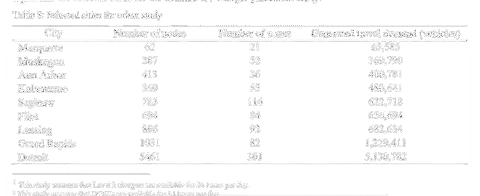
There are 82,000 electric vehicles registered in Michigan, far short of an official goal of 2 million.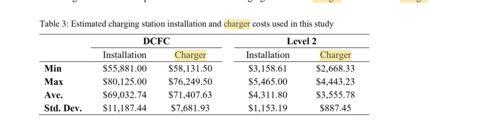 Mehrnaz Ghamami and Ali Zockaie, associate professors in Michigan State University’s College of Engineering, have studied Michiganders’ travel patterns using data provided by the Michigan Department of Transportation.
“We are considering things like making sure that our users won’t have to go out of their way to find a charging station or face significant delays while waiting for an available charger,” said Ghamami in a press release from Michigan State. “It’s not just the investment that we are considering, but also the EV users; we want to make sure every single EV trip is feasible.”
EV batteries perform worse in the winter, the authors note, which contributes to the need for more frequent charging and perhaps more chargers.
“Electric vehicle battery performance drops 30% efficiency in winter,” said Ghamami. “So, we ran different scenarios by comparing charging needs in summer to winter, in which battery performance is 70% of what it is in summer.”
Tourism also will increase the number of charging stations Michigan needs, the report said. The report found that DC fast chargers charge an EV battery quickly, but these chargers are harder on battery life.
“These findings from Michigan State University’s research reinforces [sic] our commitment to a smart, data-driven approach to expanding Michigan’s EV infrastructure,” said Michigan’s Chief Mobility Officer Justine Johnson, per the MSU press release. “Understanding how and when EV users travel ensures we can build out Michigan’s mobility ecosystem and increase charging access for users across the state. In Michigan, we will continue to lead through our innovative measures to accelerate the transition to electric mobility and supporting the needs of all Michiganders.”
The Department of Labor and Economic Opportunity and the Michigan Office of Future Mobility and Electrification funded the study.
In 2023, electric vehicles and plug-in hybrids made up 0.76% of vehicles in Michigan, compared to 4.85% in California and 1.52% nationwide, the report said.
The state is 1.9 million electric vehicles behind its 2030 goal.
“The total infrastructure cost to support all EV trips based on 25% market share in Michigan is estimated at $998 million, including $677 million for DC fast chargers and $321 million for (slower) Level 2 chargers. These costs include the cost of chargers as well as associated expenses such as grid infrastructure, construction, and land,” the report said.
The state has allocated millions of dollars to build chargers, said Rep. Pat Outman, R-Six Lakes, chairman of the Michigan House Transportation and Infrastructure Committee. Before the people of Michigan give more money to build EV chargers, they need answers to what happened to that money.
"When you’re talking about a billion dollars, the state deserves answers about why it failed to build chargers with the original $30 million allocated to build chargers,” Outman told Michigan Capitol Confidential in a phone interview.
Whitmer’s 2025 budget pitched $85 million in subsidies for electric vehicles, including $25 million for EV charging stations at multifamily complexes and commercial parking lots, $20 million to transition government fleets to EVs and hydrogen vehicles, and $10 million to transition the state fleet from internal combustion engines to EVs.
A sparse EV charging network probably isn’t even in the top 20 problems that Michigan residents face daily, Outman said. “I’m more concerned about long-term sustainable road funding, infrastructure needs, labor, issues, population issues,” he told CapCon. “Just with the cost of living nowadays days, Michigan families are already paying record high taxes to Lansing. Before we ask for billions more, the government needs to prove it can responsibly manage the money it already has. If $30 million did in fact lead to zero chargers, then why should anyone believe that $1 billion would be any better?”
Most people who own electric vehicles are male and earn nearly $200,000 annually, own a home, own multiple vehicles and have access to home charging, according to a 2021 MIT Science Policy Review article. Charger subsidies, according to Outman, would force Michiganders to pay for the lifestyles of the rich.
“These are wealthier, well-off people who are going out there and buying electric vehicles, and we’re just subsidizing that with taxpayer dollars,” Outman said. “It’s just ridiculous.”
The biggest barriers to EV adoption are the high upfront cost, range anxiety (running out of battery power while far from a charging station) and a sparse charging network.
The report says that people hesitate to buy EVs because of what it calls “perceived limitations.”
In addition to the Michigan Office of Future Mobility & Electrification and the Michigan Department of Labor and Economic Opportunity, several other units of government appear in the acknowledgements as providing input and feedback. These include the Michigan Department of Transportation, Michigan Public Service Commission, Southeast Michigan Council of Government, and the city of Detroit. Utility companies also appear in the credits, including Consumers Energy, DTE Energy and Indiana Michigan Power Company.
Michigan Capitol Confidential is the news source produced by the Mackinac Center for Public Policy. Michigan Capitol Confidential reports with a free-market news perspective.
 Michigan State Police lease first EV at $1,062 per month
 Nessel’s antitrust suit imagines widespread EV use, blocked by big oil
 Whitmer’s latest pitch for Michigan’s auto dominance: ‘We don’t care what you drive’