


Nessel’s antitrust suit imagines widespread EV use, blocked by big oil
Automakers say consumers themselves reject electric vehicles


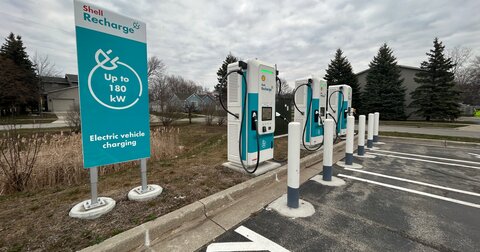
Michigan Attorney General Dana Nessel used an antitrust lawsuit to blame oil companies for the failure of electric vehicles and solar panels to be more widely used in Michigan.
The lawsuit against BP PLC, Chevron Corp., Exxon Mobil Corp., Shell PLC, and the American Petroleum Institute, filed in January in federal district court, alleges violations of the Sherman Antitrust Act, the Clayton Antitrust Act and the Michigan Antitrust Reform Act.
In 2024, Nessel picked three out-of-state law firms — Sher Edling LLP, DiCello Levitt LLP and Hausfeld LLP — to sue oil companies.
The lawsuit posits a world in which renewable energy thrives, more people drive electric vehicles, electricity is cheap, electric charger stations are widely available, and sub-zero temperature don’t shrink battery longevity.
“Electricity’s substitutability for gasoline remains constrained by insufficient charging networks, grid capacity, and battery supply—practical barriers that prevent consumers from switching even when electricity is cost-competitive,” the lawsuit said.
Fewer than 180,000 vehicles out of the 9.4 million registered in the state are electric, the lawsuit notes. Michigan pays higher electricity rates than its neighbors, according to the U.S. Energy Information Administration. Michigan pays 14.16 cents per kilowatt hour, while Ohio pays 11.29, Indiana pays 11.38, Wisconsin pays 12.72, and Illinois pays 12.21.
Most Michiganders rejected electric vehicles, but the lawsuit alleges that a cartel of oil interests, including the petroleum institute, are behind residents’ minimal demand for EVs. The Big Three automakers have taken on $50 billion in losses as they develop EVs.
“The customer has spoken,” Ford Motor Co. CEO Jim Farley said at a recent shareholder meeting. Ford lost $11.1 billion in the final quarter of 2025, giving the automaker its worst performance since 2008, Crain’s Detroit Business reported. It suffered nearly $3.6 billion in the first nine months of last year in its Model e EV division, per The Detroit News.
Meanwhile, Stellantis N.V. suffered $26 billion of EV losses and General Motors Co. reported $7 billion.
“Whereas in the U.S., fewer than 8% of new vehicles sold in 2024 were fully electric, in Norway, nearly 90% of new cars sold that year were fully electric,” Nessel’s lawsuit said. “In China, nearly half of the cars sold in 2024 were EVs. In 2025, EV sales increased by 31% in Europe and 25% worldwide. During this same period, EV sales in the United States grew by only 6%.”
The lawsuit criticizes oil companies for how they spend their money, which makes it an expansion of antitrust law, according to a blog post from Varnum, a law firm with four offices in Michigan.
“The complaint leans on the roles of the American Petroleum Institute and other industry groups, and decades of similar strategies, but provides few specific facts showing an actual agreement among the defendants to limit renewable energy or electric vehicle charging in Michigan within the relevant time period,” Varnum wrote.
The lawsuit by the Michigan attorney general blames a handful of companies, not consumers, or the federal government, which had effectively mandated that most vehicles become electric in a few years. The second Trump administration, however, struck down the EV mandate, and Congress eliminated the EV tax credit meant to encourage motorists to go electric.
“Defendants have dramatically delayed the availability of EVs, made 100% clean charging stations a rarity, suppressed the advancement of solar technology and its uptake by consumers, and prolonged fossil fuels’ dominance in mixed-source electricity generation,” the lawsuit reads.
The lawsuit claims that fossil fuel companies have conspired to cause renewable energy to fail. If not for fossil fuel interests sabotaging electric vehicle policy in Michigan, many people would drive EVs, the lawsuit says.
“Starting in the early 1980s, the Fossil Fuel Defendants halted internal research on advanced battery chemistries and hybrid electric motors, withheld market-ready prototypes, and wielded intellectual property rights not defensively but as weapons to stifle innovators with patent litigation.”
On page 66, the lawsuit quoted Exxon CEO Darren Woods, who said in September, “We don’t do wind and solar.”
The full quote is far less damning:
“We don’t do wind and solar, we have no issues with wind and solar, but we don’t have capability in that space,” Woods said. “But we do have capability of transforming molecules and there are enormous opportunities in that space to use hydrogen and carbon molecules to meet the growing demand.”
Oil companies’ decision not to install EV chargers at gas stations hurt EV adoption, the lawsuit said.
“This output reduction (of renewables) harmed the State and Michigan consumers — who rely on transportation and primary energy products shaped by national and international standards, such as gasoline and propane — by reducing consumer choice and inflating prices for transportation and primary energy products in Michigan,” the lawsuit said.
Woods has stated that he “doesn’t get the point” of EVs, according to page 53 of the lawsuit. Woods had questioned the value of having “electric vehicles that will end up being charged by power generated from coal.” Woods said this at a 2019 Oil and Gas Climate Initiative meeting.
The Nessel-initiated lawsuit is based on an alternate reality, Patrick Wright, vice president for Legal Affairs at the Mackinac Center for Public Policy, told Michigan Capitol Confidential in an email.
“The claim is so dependent on decades of ‘what ifs’ that it seems impossible that any economist could offer a realist economic impact,” Wright wrote.
Michigan Capitol Confidential is the news source produced by the Mackinac Center for Public Policy. Michigan Capitol Confidential reports with a free-market news perspective.
 Federal court throws out Nessel antitrust suit against oil companies
 Michigan attorney general’s office drives no electric vehicles
 U.S. Justice Dept. seeks court order to stop Nessel’s climate lawsuit plan