


Michigan attorney general’s office drives no electric vehicles
As Nessel alleges oil companies are suppressing EV demand, her own staff chooses gas


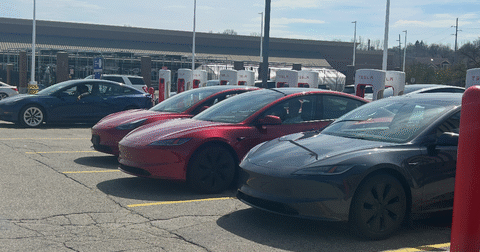
The state of Michigan owns or leases only 41 electric vehicles, according to records from the Department of Technology, Management and Budget. The state’s revealed preference for traditional gas-powered automobiles contrasts sharply with its lawsuit against oil companies, which alleges that cartelization by Big Oil, not consumer choice, accounts for poor sales of electric vehicles and solar panels.
In October 2024 Attorney General Dana Nessel’s office selected three private law firms that specialize in activist litigation to sue oil companies for allegedly contributing to climate change. But a document Michigan Capitol Confidential obtained through a records request indicates that Nessel’s office has fueled gas-powered vehicles at gas stations affiliated with the companies the state is suing.
The record, which includes two years of gas station receipts, does not show much demand for electric vehicles among the attorney general’s staff. Nessel’s office doesn’t use electric vehicles, Kimberly Bush, the director of its office of public information and education, told CapCon in an email.
“[The Department of Technology Management and Budget] Vehicle & Travel is responsible for guiding agencies in the selection, ordering, and use of state vehicles, based on how the vehicle will be deployed, as well as the availability of vehicles from the manufacturers the state contracts with,” Bush wrote. “At the present time, DTMB provides the (attorney general’s office) with 2-3 vehicle options to choose. EV options were not available; however, it is our understanding that DTMB is working in that direction.”
The lawsuit claims that a group of petroleum companies and a trade group — BP PLC, Chevron Corp., Exxon Mobil Corp., Shell PLC, and the American Petroleum Institute — violated the Sherman Antitrust Act, the Clayton Antitrust Act and the Michigan Antitrust Reform Act. These oil companies allegedly colluded to wreck consumer demand for electric vehicles and solar panels, according to the lawsuit.
MI AG gas receipts April - June 2024_redacted by mcclallen
The state of Michigan set a goal of having 2 million electric vehicles on Michigan’s roads by 2030. There are currently 102,880 electric vehicles and 19,385 plug-in electric hybrids registered, according to a document CapCon obtained from the Michigan Department of State through a records request.
The state is about 1.8 million electric vehicles short of the MI Health Climate plan goal, or 6.1% toward the 2030 goal as of April 1, 2026. Big Three automakers have reported low consumer demand for electric vehicles.
The attorney general’s office is not the only area of state government where EV enthusiasm is waning.
In her 2025 proposed budget, Gov. Gretchen Whitmer proposed spending $85 million in taxpayer funds to subsidize electric vehicles, and in 2023 she ordered the state’s roughly 14,000-vehicle fleet to convert to electric. But the governor included no money for electric vehicles in her latest budget.
Nessel’s lawsuit blames oil interests for lackluster EV demand, alleging that gas stations should have built electric charging networks. Michigan is building an EV charging network through the federal National Electric Vehicle Infrastructure Program, which allocated $106 million to the state across three funding rounds. So far, the state has started work on 82 NEVI fast-charging sites, according to a dashboard from the Michigan Department of Transportation. Of those 82 sites, seven are operational, four are under construction, 21 are in design, and 50 are awaiting a contract.
Michigan is administering federal funds to make EV charging accessible, Jocelyn Garza, deputy director of public affairs for communications and media relations for the Michigan Department of Transportation, told CapCon in an email.
“MDOT is administering federal funding identified by the National Electric Vehicle Infrastructure Formula Program to fund states to strategically deploy EV charging infrastructure and establish an interconnected network, making EV charging accessible for all users,” Garza wrote. “Our updated plan meets criteria supported by U.S. Transportation Secretary, Sean Duffy.”
The state of Michigan is preparing to spend $51 million in the third round of federal grants.
Though Nessel’s office doesn’t drive any EVs, some other state departments do.
There are over 7 million gas-powered vehicles registered statewide.
Michigan Capitol Confidential is the news source produced by the Mackinac Center for Public Policy. Michigan Capitol Confidential reports with a free-market news perspective.
 Federal court throws out Nessel antitrust suit against oil companies
 Nessel’s antitrust suit imagines widespread EV use, blocked by big oil
 Michigan State Police lease first EV at $1,062 per month