


Montana’s measures to tackle housing crunch offer hope for Michigan
State House considers reforms that allowed greater variety of construction in Big Sky State


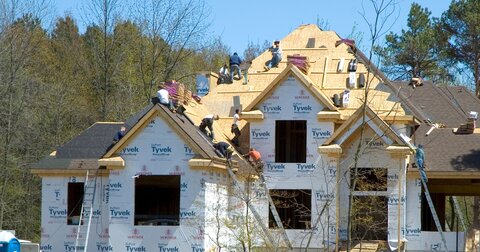
Michigan could follow Montana’s lead after state House members introduced a bipartisan package of bills aimed at making housing less costly.
“The bipartisan Housing Readiness Package modernizes our development processes to reduce unnecessary costs and delays, making housing more affordable and available across the state,” according to a press release from the House Republican caucus. “This is about ensuring Michigan is prepared for growth and that more residents have access to safe, stable homes.”
The package draws on ideas Montana successfully enacted in 2023 and 2025 to ease the state’s housing shortage. It includes Michigan House bills 5529, 5530, 5531, 5532, 5581, 5582, 5583, 5584 and 5585. The package is intended to restrain cities and counties from restricting accessory dwelling units, duplexes, and other non-single-family units; to limit protests and impact studies on developments; and to reduce local red tape.
Housing costs in Michigan have almost doubled in recent years, according to the Federal Reserve Bank of St. Louis. Michigan has exceeded the pace of housing inflation found in other states.
The average price of homes in the state was about 75% of the national average in 2012, but it is roughly 82% of the average today, according to Jarrett Skorup, vice president of marketing and communications at the Mackinac Center for Public Policy.
Inflation, interest rates, and rising construction costs have increased housing prices, Skorup told Michigan Capitol Confidential, but local government red tape is still making things worse.
“A lot of this is because of dumb, unnecessary, big-government policies at the local level,” Skorup told CapCon in an email. “This bill package protects the private property rights of citizens in a way similar to what Montana and many other states have done. It is good policy that will help people afford to live where they want.”
Montana made changes to legalize duplexes, allow accessory dwelling units, open commercial zones to housing, and permit taller buildings that can accommodate more housing units.
The laws faced a legal challenge, but the Montana Supreme Court unanimously upheld the bipartisan legislation.
“There are a lot of similarities between what is being proposed in Michigan and what we accomplished in Montana,” Forrest Mandeville, a Republican state senator from Stillwater County, told Michigan Capitol Confidential in an email.
Montana enacted laws that call for freedom to build duplexes and accessory dwelling units by right (with no need for extra approvals) in many cities. The Big Sky State also streamlined review processes and simplified public participation.
“These reforms were necessitated by a housing market that was seeing prices skyrocket and existing zoning that created a lot of single-family-only development in large areas,” Mandeville said.
A broad coalition supported the changes: builders, real estate agents, free-market advocates and some local government groups, Mandeville told CapCon. Housing prices and rents have stabilized since the legislation was enacted.
“We tried to get government out of the way to encourage building without red tape,” Sen. Jeremy Trebas, a Cascade County Republican, told CapCon in an email about the housing situation in Bozeman. With a population of 60,000 and slow growth, the city faced a housing crunch, with a large inventory of aging and obsolete buildings. Expensive housing and taxes, Trebas said, were driving people to move to Washington, California and other states.
“If we could change land-use policy, encourage development of higher density like duplexes as infill, allow for housing in commercial zones (as it was a 100 years ago), reduce minimum lot sizes, and allow by-right accessory dwelling units and such, we could let the market work to produce density and supply without spending government dollars to incentivize it,” Trebas said.
Opponents of Montana’s reforms expressed concerns about more people moving in from out-of-state, said Trebas. He countered that Montana natives were hurt by high costs that price upcoming generations out of the housing market.
Michigan Capitol Confidential is the news source produced by the Mackinac Center for Public Policy. Michigan Capitol Confidential reports with a free-market news perspective.
 Lawmakers, advocates push housing reform to address high costs and shortages
 Michigan among the worst in the country for government's burden on homeownership
 State pension debt drops $3.6 billion in Michigan