


State health worker sues Michigan after being punished for refusing to bill 'illegal' debts to seniors
Whistleblower says state retaliated against her for reporting internal problems


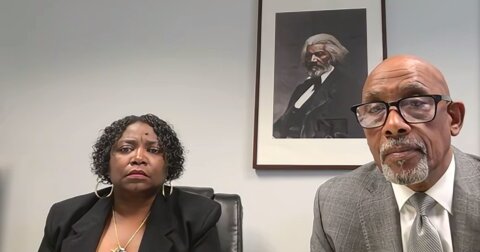
A 28-year veteran of the state health department has filed a lawsuit in the Wayne County Circuit Court claiming the state retaliated after she reported wrongful efforts to recoup reported overpayments from thousands of residents.
Minnie Cordell’s 75-page lawsuit targets the state of Michigan, the Michigan Department of Health and Human Services, and her supervisors Monica Shumaker, Elyse Williams and Jody Anderson.
The lawsuit claims that the state gave thousands of state residents benefits from 2019 to 2026 and is now trying to recoup that money by seizing tax returns, garnishing wages and fining them. The suit claims that the benefits were rightly awarded and that the state is now trying to recoup Food Assistance Program debt through the Michigan Combined Application Project, a practice Cordell says was prohibited by a 2020 administrative court ruling.
Cordell warned those in the highest levels of state government about the alleged wrongdoing, according to the lawsuit.
She alerted Gov. Gretchen Whitmer to the problem on Feb. 26, 2024, the suit claims; on March 8, 2024, she warned Attorney General Dana Nessel’s office; on Aug. 26, 2025, she complained to the Department of Licensing and Regulatory Affairs.
The lawsuit claims that the defendants retaliated and discriminated against Cordell.
Starting in January 2023, according to the lawsuit, Cordell protested “unlawful and or discriminatory directives and practices” within the department’s Overpayment Establishment Section that charged overpayment debts to many sick, elderly, and disabled residents under the Michigan Combined Application Project and the Food Assistance Program.
From fiscal year 2023 to 2024, the number of MiCAP overpayments jumped from 440 to 8,588 — an 1,852% increase. In dollar terms, the overpayment spike — from $123,980 to $441,083 — comes to a 256% increase, according to a document that Michigan Capitol Confidential obtained through a records request.
After Cordell protested the recoupment effort, around Feb. 14, 2024, Anderson allegedly assigned Cordell about 240 referrals from 2021 — a three-year backlog — while other employees in her position used a shared mailbox to tackle the workload, the lawsuit said. Cordell’s supervisors at the Overpayment Establishment Section were Shumaker, Williams and Anderson.
Cordell is represented by the firm Mungo and Mungo at Law.
“She refused to participate in falsely charging these individuals with overpayments and engaging in collection against them,” attorney Leonard Mungo said at the Friday morning news conference. “We’re here today to let the public know that there are thousands of vulnerable citizens in Michigan today, and I mean upward of 14,000, who are recipients of the food assistance program, who are being falsely charged with not qualifying for the program.”
The errors, if continued, could subject Michigan to federal penalties of up to $320 million because of a high payment error rate, Mungo said.
MDHHS Whistleblower lawsuit 2026 by mcclallen
“Because of her above described activity, advocacy and refusals to participate in unlawful practices, Defendants subjected Plaintiff to a continuous and escalating pattern of retaliation that caused severe harm to her health, career, and livelihood,” according to the suit.
Michigan allegedly collected improper MiCAP-to-FAP debts, although a binding administrative law judge order in 2020 told the department to delete these debts and to complete FAP eligibility using actual income and expenses, according to the lawsuit.
Since 2020, thousands of disabled and elderly residents have been subjected to unlawful collections, Mungo said.
“We’re asking that as many as those individuals who have been subject to these aggressive, abusive collection actions, who may be great witnesses in Ms. Cordell’s prosecuting her case as a whistleblower protecting these individuals, to come forward,” said Mungo.
“The state, my department, is making people pay debts, maybe $20,000 to $30,000 maybe even more,” Cordell said during the press conference. “Michigan citizens have been subjected to debt that’s illegal and fraudulent. These people are our seniors. We should be looking out for our seniors, but no, the state of Michigan is harming our seniors by making them pay illegal and fraudulent debts.”
Michigan’s health department did not respond to a request for comment.
“These citizens were entitled to their benefits,” Cordell told CapCon in a text message. “The department know[s], and they still let the harm continue.”
Michigan Capitol Confidential is the news source produced by the Mackinac Center for Public Policy. Michigan Capitol Confidential reports with a free-market news perspective.
 Overpayments in state food program spike 1,852% in one year
 Michigan’s SNAP administration costs to jump $94 million as feds shift burden to states
 Comstock Schools: Teachers could get raise by dropping MESSA for cheaper health plan