


Royal Oak rejects affordable housing development
Project funding will likely be returned to the federal government after Zoning Board of Appeals blocks 45-unit development


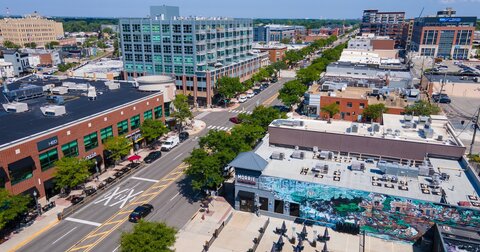
The Royal Oak Zoning Board of Appeals rejected a request on March 12 to accommodate a 45-unit affordable housing development for downtown.
The quasi-judicial body of nine members denied a parking variance sought by Lockwood Development Co, LLC on a vote of 4-2. Board members Arvind Reddy and Isaac Wolf voted to approve the variance. One seat is open and another member recused himself.
The development would have provided 40 affordable housing units and five workforce housing units, a representative of the developer said. The project, planned for the corner of East Third Street and Knowles Street, was to be partially funded by the federal American Rescue Plan Act, with funds channeled through the Michigan State Housing Development Authority.
Those funds must be spent by Sept. 30, after which the city is required to send that money back to the federal government. The site will likely remain a parking lot.
Board Member Michael Leinweber made the motion to deny the variance request.
“As has been discussed, I think that the proposal as shown puts a burden on the neighborhood and that all the criteria are not met,” Leinweber said. “I feel that it does put a burden on the property owners in the area.”
Some members of the public said they supported the project because of high housing costs. Others said it would increase congestion downtown.
Royal Oak’s standard zoning ordinance requires 1.5 parking spots per each dwelling unit. That would mean 68 parking spaces for the project, but the developer offered 35 parking spaces, said city planner Alex Bahorski.
The board previously approved a plan that included underground parking and more floors, but the developer changed the plan due to projected costs and a too-high water table that made underground parking unworkable.
Even if the appeals board approve the variance, the project would still need to go before the state housing authority.
YIMBY Oakland County, a group that supports more housing in the county, said the board blocked more affordable housing.
“This is exactly how the housing crisis gets perpetuated. Several ZBA members said they support affordable housing in theory, but in practice the board found reasons not to allow it,” the group said in a news release. “Objections included concerns that reducing parking would discriminate against people who own cars, and even questions about how residents would carry groceries into the building without parking spaces.We cannot continue to put solutions to the housing crisis before boards and committees that oppose housing when it actually comes time to approve it. Royal Oak is rewriting the zoning ordinance, and we need you to provide input that you want the new ordinance to have reasonable requirements so homes are not blocked by a few unelected community members.”
In 2024, city regulators approved a proposal for a downtown apartment building at 505 Lafayette and waived the parking lot requirement, which was for 85 spots.
The board vote came before members of the Michigan Legislature introduced nine bills that they say will make housing more affordable. Those bills are 5529, 5530, 5531, 5532, 5581, 5582, 5583, 5584 and 5585.
The bills would allow multiple homes on single lots across the state, such as duplexes and accessory dwelling units. They also would limit local governments’ power to mandate a minimum number of parking spots, require studies and documents for site plans, minimum setback requirements, minimum lot sizes and minimum home sizes.
“Michigan’s housing shortage isn’t an accident — it’s the result of policy choices that make building homes harder and more expensive than it needs to be,” Jarrett Skorup, vice president of marketing and communications at the Mackinac Center for Public Policy, said in a February press release on a housing reform legislative package currently before the Legislature. “This package eliminates some of these barriers to help create more opportunities for affordable and accessible housing.”
Lockwood Companies founder Rodney M. Lockwood, Jr. is the chairman of the board of the Mackinac Center for Public Policy, which owns Michigan Capitol Confidential.
Michigan Capitol Confidential is the news source produced by the Mackinac Center for Public Policy. Michigan Capitol Confidential reports with a free-market news perspective.
 Michigan University Hospital, union feud over parking spots
 Lawmakers, advocates push housing reform to address high costs and shortages
 Ann Arbor mulls green energy mandates as housing costs soar