


Whitmer seeks $150M for megasite prep after market rejects $261M Mundy site
How does buying and demolishing 43 homes solve state’s housing crunch?



Gov. Gretchen Whitmer's proposed 2026-27 fiscal year budget includes $150 million to spend on new public infrastructure for megasites.
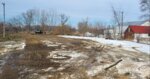
The proposal comes after the state spent $261 million on site preparation at the Mundy megasite that spans about 1,300 acres in Genesee County. That money was spent, in part, on buying residents out of their homes and then demolishing 43 buildings for a project that never came.
Michigan Capitol Confidential obtained a copy of the demolition map through a records request.
Responsive Material Combined Ref 111 - Updated by mcclallen
Michigan Attorney General Dana Nessel should sue to stop more houses from being demolished, according to Rep. Steve Carra R-Three Rivers.
Carra, who chairs the House Oversight Subcommittee on Corporate Subsidies and State Investments, visited the Maple Creek Preserve, a subdivision near the megasite, March 28. In a press release, he accused the state of subsidizing construction of homes while simultaneously paying to tear down homes.
“Michigan has a housing shortage. Spending taxpayer dollars to purchase and demolish perfectly good houses for a project that may never materialize is foolish,” Carra said. “Corporate giveaways like the Mundy Megasite are schemes of Gov. Gretchen Whitmer, the (Michigan Economic Development Corporation), and special interest groups who expect favors in return for big campaign contributions.”
Whitmer said April 17 that she supports more housing.
At a time of uncertainty, Michigan stands united in what brings us together — more housing, lower costs, and helping every child read.
— Governor Gretchen Whitmer (@GovWhitmer) April 17, 2026
We're tackling these issues at the Cadillac Chamber Breakfast and across the state to make Michigan the best place to live, work and thrive. pic.twitter.com/4jrGQOTdcf
The Mundy megasite site has the reputation for being the best in America, Tyler Rossmaessler, executive director of the Flint & Genesee Economic Alliance, told CapCon in an email.
“The Alliance remains focused on creating a turnkey site, one that has a reputation for being the best in North America,” Rossmaessler wrote. “We are committed to making this site attractive to an advanced manufacturer that will create thousands of jobs and pump billions of dollars into our local economy. Feedback from several leading site selectors and companies indicated that the large and contiguous nature of this site, as well as its proximity to key infrastructure, makes it the best site in North America.”
Michigan has a history of betting large sums of taxpayer money on projects that don’t reach completion. A Mackinac Center study found that only 9% of the jobs announced in major state-sponsored deals from 2000 to 2020 were ever created.
Nessel is trying to claw back $24 million from Gotion, a company that pulled out of a failed plan to create an electric vehicle plant in Mecosta County. The plant, expected to create 2,350 jobs, was never built.
Michigan taxpayers gave $61 million to the Flint & Genesee Economic Alliance Foundation in June 2025. They also gave $46.7 million to the Marshall Area Economic Development Alliance in February 2025 for what was to be the Ford BlueOval Battery Park. In 2023, Michigan paid $185 million to buy the land in Marshall, prepare for development, and hope for a buyer.
Neither project has worked out in favor of taxpayers, according to James Hohman, the director of fiscal policy at the Mackinac Center for Public Policy.
“Michigan’s site preparation subsidies are poorly designed. The strategic site readiness program guarantees taxpayer costs but not jobs,” Hohman told Michigan Capitol Confidential in an email. “Taxpayers are out hundreds of millions already buying land and preparing it for companies that did not open their announced factories.”
Michigan Capitol Confidential is the news source produced by the Mackinac Center for Public Policy. Michigan Capitol Confidential reports with a free-market news perspective.
 Kettering student sues Genesee County over secret Flock camera records
 EGLE swoops in on Mundy megasite
 $259M in tax funds spent, but Whitmer’s Mundy megasite has no buyer