


Michigan paid more in fraud than it would cost to fix Bridge Cards
In 2015, agency admitted paying nearly $31M due to fraud


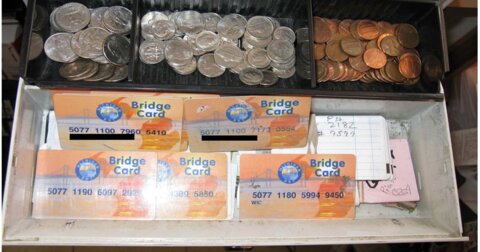
Criminals stole at least $14 million in food stamp benefits from Michigan’s most vulnerable residents last year — and the state shows no interest in pursuing a relatively low-cost fix for this growing problem.
The state loads money onto cards used by the Supplemental Nutrition Assistance Program, which recipients can use to swipe at grocery stores, farmers' markets, and gas stations. It could solve part of the problem by switching from magnetic cards that are easily cloned to more secure chipped cards. Switching to chipped cards would cost Michigan $8 million, and the federal government would pay $8 million, Michigan Capitol Confidential reported in May.
SNAP fraud in Michigan jumped by nearly 400% from 2023 to 2024, CapCon exclusively reported in May. The state mailed more than 269,000 replacement Bridge Cards in 2024.
About 10 years ago, the state paid $30.8 million in fraud within Michigan’s Department of Health and Human Services, which works with the federal government to feed the state’s most vulnerable.
In 2019, the agency found $11.4 million in fraud. In 2021, the agency found $6.1 million in fraud.
The state health department keeps records of individual and retailer fraud, but it denied a CapCon request for these records.
“As to those data analyses and queries regarding specific investigations, those records constitute investigatory records compiled for law enforcement purposes, the disclosure of which would constitute an unwarranted invasion of personal privacy and would disclose law enforcement investigative techniques or procedures, and therefore are exempt from disclosure,” a representative of the Michigan Department of Health and Human Services wrote in rejecting the request. “Additionally, food stamp transaction data is confidential.”
The state health department hasn’t responded to more than 10 requests for comment about food stamp fraud.
Michigan could slash SNAP fraud if it chose to, Haywood Talcove of LexisNexis Risk Solutions, a company banks and unemployment agencies use to help prevent fraud, told CapCon in an email.
"Fraud in the SNAP program has always been underestimated, and with the rise of AI-driven schemes and organized crime rings, it’s only accelerating,” Talcove wrote. “The fact that Michigan paid out more in fraud in 2024 than it would cost to switch to chip-enabled cards is telling. But switching cards alone won’t solve the problem. We need a layered strategy that includes identity verification, validating and triangulating self-reported data, and ensuring applicants are who they say they are.”
Michigan must crush retailer fraud at high-risk locations like small bodegas where trafficking often occurs, Talcove said.
“The technology and tools exist — the question is why Michigan and the other states haven’t acted.”
Michigan has paid out at least $50 million in fraud over the past decade. Over the past few years, five states have either switched to chipped SNAP cards or are doing so — Alabama, California, Maryland, New Jersey, and Oklahoma, according to the U.S. Department of Agriculture.
Criminals stole about $300 billion of taxpayer money during the pandemic, according to a June 10, 2025, report from the U.S. Government Accountability Office.
From March 2020 through December 2024, 46% of the 1,875 defendants convicted of pandemic-fraud-related offenses with final charges recorded also faced conspiracy charges, suggesting involvement of an organized group.
Have you had your Bridge Card benefits stolen or do you know someone who has? Reach out to CapCon. We’ll try to help you.
Michigan Capitol Confidential is the news source produced by the Mackinac Center for Public Policy. Michigan Capitol Confidential reports with a free-market news perspective.
 Michigan could be first Midwest state to upgrade SNAP cards
 CapCon reporting on SNAP fraud leads to statewide card upgrade
 SNAP fraud skyrockets as Michigan sends 738 new Bridge Cards a day