


Public school advocates call for higher taxes
Analyst disputes claims of Invest in MI Kids campaign


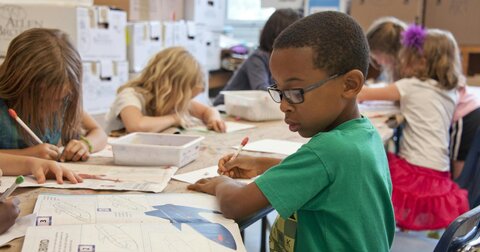
A public school interest group pushing for a 2026 ballot initiative to raise taxes on high-income earners in Michigan held a virtual event July 21 to rally support. At least one expert in education policy questions whether the proposed funding boost for schools would improve test scores.
Invest in MI Kids, the group organizing the initiative, aims to amend the Michigan Constitution to double the state income tax rate on residents who have the highest incomes. Extra money raised from the tax increase would be slated to go toward public education, as Michigan Capitol Confidential previously reported on the group’s campaign.
During the online event, Helena Lazo, a board member of Urban Neighborhood Initiatives in Detroit, said there has been a decrease in education funding, particularly at the federal level.
“The decrease in funding is from the federal government,” Lazo said in an email to Michigan Capitol Confidential. She also said the Trump administration will reduce federal money for education, citing Title I and special education programs as examples.
While the state’s per-pupil allocation for schools has increased, Lazo said, it remains inadequate to meet the needs of all students, especially those with disabilities.
Molly Macek, director of education policy at the Mackinac Center for Public Policy, told CapCon that the record does not support claims of an overall funding decline.
School revenue from federal, state and local sources totaled $20.17 billion in 2017, which equals $14,594 per student, she said.
That amount increased to $30.46 billion, or $23,665 per student in 2024, according to Macek. She added that federal revenue doubled in the same timeframe, going from $1,255 to $2,684 per student.
“Over the past decade, state spending on K-12 education has increased by nearly 35% when adjusted for inflation,” Macek said.
Invest in MI Kids did not respond to a request for comment.
Children in low-income areas are ill-served, Christy King, a board member of the Macomb County NAACP, said during the event.
The state changed its funding model to provide significantly more tax dollars to districts with high concentrations of poverty, Macek told CapCon. She pointed to a recent blog post in which she explained the structure in greater detail.
“Even still, student achievement continues to lag, with Michigan placing 44th in the nation in fourth grade reading in 2024,” Macek added
King did not respond to an email seeking comment.
Heidi West, a teacher in the Detroit Public Schools Community District, also participated in the livestream. Student funding, she said, is based on local property values, and taxing the wealthy would help close the equity gap.
The state acted years ago to address the gap, Macek told CapCon.
“The purpose of Proposal A was to equalize base funding across the state so that local property values were no longer a primary determining factor in district funding amounts,” she said.
She told CapCon that the state recently adopted another model of funding called the Opportunity Index, which provides more funding for districts with higher concentration of poverty.
The tiered funding system, Macek said, is supposed to provide high-poverty districts with an extra 35-47% of the foundation allowance. Before this change, school districts with a large share of low-income residents received at least an extra 11.5% of the foundation allowance.
West did not respond to a request for comment.
Michigan Capitol Confidential is the news source produced by the Mackinac Center for Public Policy. Michigan Capitol Confidential reports with a free-market news perspective.
 El-Sayed blames outdated funding approach for school woes
 Michigan spends record amount on schools, gets worse reading scores
 Michigan school funding tops inflation since before the pandemic