


State health dept. classed Wayne, Oakland counties as ‘partially rural’ when seeking federal grant
Move is ‘an insult to everyone who lives north of Clare,’ legislator says


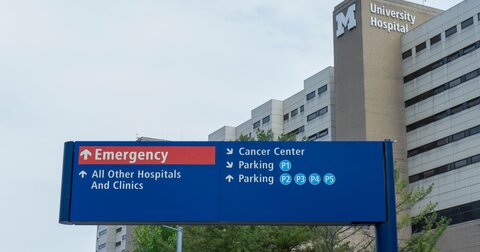
The Michigan Department of Health and Human Services came under fire from legislators after it classified Wayne and Oakland counties as partially rural, making them eligible for federal funds meant to improve health care for rural Americans.
Changes to the state health agency’s definition of a rural community mean the two counties, along with others in Michigan, will receive federal grant money aimed at rural health care access. With a population of 639,111 in the 2020 Census, Detroit is Michigan’s largest city and is ranked as the 27th-largest U.S. city by World Population Review, ahead of such major urban areas as Baltimore, Portland and Memphis. The Detroit Metropolitan area, which includes both counties, is the 13th-largest in the United States, according to the Census Bureau, with a population of nearly four million.
There are rural parts of both counties, Beth Nagel, senior deputy director for the Policy, Planning and Operational Support Administration at the Michigan Department of Health and Human Services, told legislators during a Jan. 21 House Appropriations Committee hearing on the Rural Health Transformation Program. A “partially rural” area, according to a slide Nagel presented to the committee, is one in which at least one Census tract qualifies as rural by standards of the Federal Office of Rural Health Policy.
Under a federal funding law, the Centers for Medicare and Medicaid Services will distribute $50 billion to states at a rate of $10 billion per year.
The program, according to the U.S. Department of Health and Human Services, is meant “to strengthen and transform rural health care systems across the United States so that people living in rural communities have better access to affordable, high-quality, and sustainable health care.”
Michigan has been awarded $173 million, or $83 per rural resident, Nagel told the assembled lawmakers.
Texas received the least amount of any state, Nagel said, at $66 per rural resident. Wisconsin and Kentucky tied for receiving the most, $95 per rural resident.
Kent Dell, a policy analyst at the Michigan House Fiscal Agency, disputed Nagel’s figures, saying Michigan receives closer to $63 per rural resident.
Michigan’s administrative cost for the grant is $18.8 million, Dell said, adding that the figure includes expenses incurred by nonprofit organizations and local governments involved in the program.
The state health department will use $2 million out of the $18.8 million to pay for overhead expenses, such as staff salaries, wages and benefits, Dell said.
Rep. Cam Cavitt, a Republican member of the committee from Cheboygan, condemned the distribution to the two urban counties, saying in a press release, “Southeast Michigan has never seen a dollar it didn’t want to siphon off.”
Greater Detroit residents have access to nationally recognized hospitals, Cavitt said.
“To suggest that Wayne County deserves rural funding is an insult to everyone who lives north of Clare,” he said. “When Lansing talks about being ‘inclusive,’ too often it means Northern communities get left behind.” Cavitt also criticized the state health department for not securing enough federal funding.
The Michigan health department classified 58 counties as fully rural and 17 as partially rural, Nagel said. It wanted to ensure that hospitals that treat a large number of rural residents could receive funding, even if they were not in rural areas themselves.
Genesee, Livingston, Oakland, Washtenaw and Wayne were among the counties deemed partially rural.
Congress authorized funding for the grant program under the Big Beautiful Bill.
Grant amounts announced Dec. 29 last year reflect only the first year of funding, not final allocations, Kristen Clemens, public affairs specialist at the Centers for Medicare and Medicaid Services, told Michigan Capitol Confidential in an email.
The amount awarded to each state is not directly tied to its population or its number of rural hospitals, according to Clemens.
Roughly half of the total program funds are distributed equally among all approved states, Clemens said. The rest are distributed based on grant applications from each state.
Federal officials evaluate state applications by using “data-driven measures of rurality and rural health system characteristics” along with a merit-based review of each state’s proposed initiatives, readiness, and potential impact, Clemens said. The next allocation of funds, covering two years, will be announced by Oct. 31.
Michigan’s grant application is available online at the Michigan Department of Health and Human Services.
Michigan Capitol Confidential is the news source produced by the Mackinac Center for Public Policy. Michigan Capitol Confidential reports with a free-market news perspective.
 Oakland County shoots down school millage
 House votes for parental access to medical records of minor children
 Comstock Schools: Teachers could get raise by dropping MESSA for cheaper health plan