


State subsidy program offered $1.45B, produced few jobs
Program’s leader says it still is not a failure


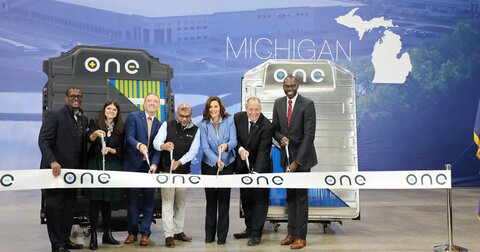
The Strategic Outreach Attraction Reserve Fund unequivocally was not a failure, Quentin Messer, chief executive and economic competitiveness officer of the Michigan Economic Development Corporation, said in a Nov. 12 Gongwer News Service interview. But critics of the program at the Mackinac Center for Public Policy say otherwise.
Messer told Gongwer that the SOAR program did not fail but did instead what it was intended to do: “get us into the consideration set, improve the portfolio of development-ready sites across the state and secure investment from large, advanced manufacturers who have significant ’CapEx,’ capital and investment needs.”
But using taxpayer funds on businesses that might consider opening or keeping their doors open might not sit well with Michiganders, James Hohman, fiscal policy director at the Mackinac Center for Public Policy, told Michigan Capitol Confidential in an email.
The program offered $1.45 billion to nine companies to create 14,779 jobs, Hohman wrote in a Sept. 25 commentary.
SOAR should be shut down, Hohman believes, adding that states with the fastest job growth do not rely on corporate welfare.
Leading deals involving SOAR include:
- Detroit Diesel Corporation, $27.7 million
- Solar Technology LLC, $68 million
- Dow Inc., $120 million
- Ultium Cells LLC, $120 million
- Gotion Inc., $125 million
- Ford Motor Co., $100.8 million and $210 million
- Our Next Energy Inc., $200 million
- General Motors Co., $480 million
Though the state has spent $720 million on the program, Hohman said, the companies receiving the funds have yet to create new jobs.
“I’m not sure what standard could be used to see that as a success,” Hohman said.
Creating jobs is not the program’s only goal, its overseeing organization told CapCon.
“First and foremost, it’s important to recognize there are two components to SOAR: Critical Industry Program grants, where jobs are a milestone, and Strategic Site Readiness Program, where jobs are not necessarily a component,” said Danielle Emerson, spokesperson for the MEDC, wrote in an email.
If a deal includes a milestone for job creation, Emerson said, it may not have been completed, noting that some commitments run through 2033. She cited several grant recipients that have hired some employees but not the full amount called for in the incentive deals.
The subsidy program helped narrow the competitive gap between Michigan and other North American locations, Emerson said.
A 2024 report by the Mackinac Center found that between 2000 and 2020, only 9% of the jobs promised through official subsidy programs materialized.
Michigan Capitol Confidential is the news source produced by the Mackinac Center for Public Policy. Michigan Capitol Confidential reports with a free-market news perspective.
 2025 brought reforms to earmarks, corporate subsidies, road funding and employer mandates
 SOAR fund would plummet under state Senate bills
 Secret subsidies: Mackinac Center sues Treasury Department over brownfield records