


Torch Lake couple takes EGLE to federal appeals court over permit standoff
Wetlands permit dispute heads to Sixth Circuit Court of Appeals


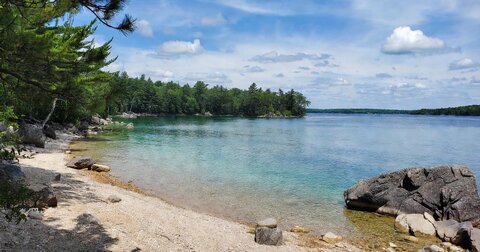
Stephen and Deborah Gmeiner, property owners in Antrim County, Michigan, have filed a brief in the United States Court of Appeals for the Sixth Circuit, challenging a district court’s ruling that dismissed their lawsuit against Keri Kent, an environmental quality analyst with the Michigan Department of Environment, Great Lakes, and Energy.
The case, Gmeiner v. Kent, centers on allegations that EGLE officials said they would not issue the Gmeiners a wetlands permit unless they promised to release state officials from any legal liability that might arise from the property for which they seek a permit. This condition, the lawsuit alleges, violates constitutional principles and exceeds the department’s authority.
The Gmeiners own property along Torch Lake in Milton Township. Walking safely to the shore through a wetland requires a man-made pathway, they state in a court document. Landowners who wish to undertake a project such as this one must, under state law, obtain a permit. The couple requested a permit to build a six-foot-wide pathway, but the state’s environmental agency denied their application. They challenged that decision in an administrative hearing and prevailed.
On Dec. 9, 2024, Administrative Law Judge Michael St. John ordered EGLE to issue a permit.
Gmeiner - Appellant Brief - Stamped by mcclallen
State officials did not appeal the ruling. But the department told the Gmeiners that before it issued the permit, they would need to “indemnify and hold harmless the State of Michigan and its departments, agencies, officials, employees, agents, and representatives for any and all claims or causes of action arising from acts or omissions” they took “in connection with this permit.”
The Gmeiners objected, arguing that the relevant state environmental law — the Natural Resources and Environmental Protection Act — contains no such requirement. They asked Kent to issue the permit and drop the demand for a hold-harmless agreement. Kent refused and the Gmeiners filed suit.
In their brief filed on Jan. 2, 2026, the Gmeiners say that the district court erred in dismissing their claims that the state acted unconstitutionally and beyond its legal authority.
Michigan has about 6.5 million acres of wetlands. Federal and state laws restrict the activities property owners can undertake on wetlands, including building homes or expanding ponds.
The landowners argue that Kent is trying to coerce them by refusing to give them something they are entitled to under the law. Kent, they say, would require them to surrender certain rights. Their motion also says the district court should have ordered Kent to issue the permit. By not doing so, the motion says, the district court abused its discretion. Kent and the department, they say, continues to violate their property rights.
“This case is fundamentally about the limits of government power,” Philip L. Ellison, attorney for the Gmeiners and principal at Outside Legal Counsel PLC, said in a statement. “These property owners secured their permit through the administrative process. For a state official to then dangle it like a carrot, demanding they assume unlimited liability not required by statute, is effectively extortion.”
The lawsuit asks the appeals court to reverse the district court’s judgment, send the dispute back to the district court judge for reconsideration and issue a preliminary injunction.
Oral argument has not yet been scheduled. The agency hasn’t responded to a request for comment.
Michigan Capitol Confidential is the news source produced by the Mackinac Center for Public Policy. Michigan Capitol Confidential reports with a free-market news perspective.
 Property owners fight back against $25K daily wetland fines