


Mackinac Center calls on lawmakers to ease licensing barriers for people with criminal records
A job is key to rehabilitation, report says


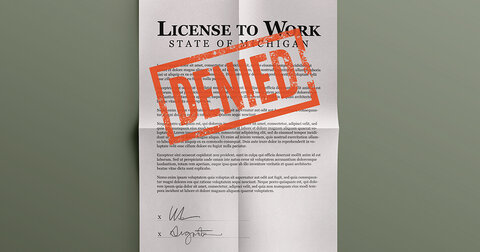
Michigan’s occupational licensing laws prevent some residents with criminal records from finding work and rebuilding their lives, according to a new policy brief published by the Mackinac Center for Public Policy.
The report, Unlock Opportunity: How Michigan’s Licensing Laws Block Second Chances, urges lawmakers to eliminate unnecessary barriers to employment for people who have already paid their debt to society and are trying to earn an honest living.
“No person or business should ever be forced to hire someone with a criminal record, but the government should not punish people for life by making it illegal for them to get a license, find a job, and improve their own lives,” Jarrett Skorup, vice president for marketing and communication at the Mackinac Center and author of the report, told Michigan Capitol Confidential.
Michigan lawmakers, he added, should change state licensing laws to make it easier for people to rehabilitate their lives, provide for their families and contribute to society.
The licensing laws could affect between two and three million Michiganders who have a criminal record, according to the report.
If a state reduces by 10% the number of occupations subject to licensing, that could be followed by a 10% decrease in rearrests, or recidivism, the report said.
Reducing the rigidity of the training requirements could lead to similar effects; loosening those by an average of 10% could reduce recidivism rates by 13%.
Michigan lawmakers enacted some reforms in 2020 for residents with a criminal record who seek an occupational license.
The Mackinac Center report recommends expanding the 2020 reforms to all licensed occupations. It also calls for narrowing the circumstances for which past convictions could be used to deny licenses. The report suggests limiting such denials to felonies directly tied to the job in question and requiring the state to show a clear risk to public safety.
The Michigan Department of Licensing and Regulatory Affairs, which administers the state’s occupational licensing regime, did not respond to an email seeking comment.
Michigan Capitol Confidential is the news source produced by the Mackinac Center for Public Policy. Michigan Capitol Confidential reports with a free-market news perspective.
 Bill would cut required training hours for barbers
 Michigan bill demands 750 training hours for estheticians
 Michigan scores another mediocre rating in national assessment
Jobs agency ghost-writes its own public relations