


Former state health director appears to back reforms to state agency he once led
‘Robert Gordon stretched his administrative powers to extremes never seen’


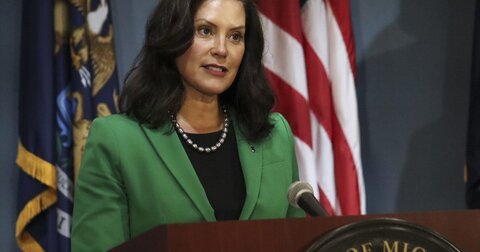
Michigan’s former health department director, Robert Gordon has appeared to align himself with efforts to scale back and modernize the very administrative structures he once relied on during the COVID-19 pandemic.
Gordon issued several sweeping epidemic and emergency directives during the pandemic’s early months.
Many of those actions taken in 2020 raised legal and procedural questions, Michael Van Beek, director of research at the Mackinac Center for Public Policy, told Michigan Capitol Confidential in an email. One question was whether the health department Gordon led exceeded its authority.
Gordon, in a social media post published last month, appeared to endorse calls to reform state administrative systems. He called the work essential at a moment when people expect more effective government.
“If ever there was a time for state governments to deliver for their residents, this is it,” Gordon wrote in response to a post from Jennifer Pahlka, author of “Recoding America: Why Government is Failing in the Digital Age and How We Can Do Better.”
Her post included the following statements:
- “Updating government’s operating model means confronting decades of accumulated procedures, outdated systems, and entrenched interests.”
- “We inherited a system built in the industrial era to win a world war and recover from an economic depression, and then lawyered up starting in the sixties to correct for abuses of power.”
Private sector leaders and contractors have had to grapple with unnecessary government bloat, she added.
Gordon was a key figure in state government during his time at the Michigan Department of Health and Human Services, using unilateral power that caused businesses to shutter and take other actions.
“As director of Michigan’s health department, Robert Gordon stretched his administrative powers to extremes never before seen in this state’s history,” said Van Beek.
Van Beek observed in July 2022 that more than 30 laws grant sweeping emergency powers to public officials.
Gordon issued an epidemic order in April 2020 that required every Michigan resident to comply not only with Gov. Gretchen Whitmer’s executive orders, but also with frequently asked questions, or FAQs, posted on a state website.
The FAQs were not formal rules or regulations, and they did not undergo a standard rule-making process.
That same day, Gordon unveiled the epidemic order he issued an emergency rule to increase fines for violating the governor’s orders to $1,000.
Michigan law, according to Van Beek, allows emergency rules only when necessary for the “preservation of the public health, safety, or welfare.”
Gordon argued in an April 2020 press release about the new rule that protecting public health required imposing fines and revoking various licenses. “Criminal penalties for violation will remain an option for prosecutors,” the press release added.
Several epidemic-era orders Gordon issued had no expiration date, Van Beek told CapCon, effectively leaving their duration open-ended and subject solely to the director’s judgment.
Gordon left his state job in January 2021. Under a nondisclosure agreement, he was to receive a payment of $155,000.
The Detroit News reported on his departure in March 2021, noting that neither Gordon nor the state would talk about why he left his employment shortly after he issued an order allowing for indoor dining at restaurants to resume.
Gordon did not respond to an email seeking comment.
Michigan Capitol Confidential is the news source produced by the Mackinac Center for Public Policy. Michigan Capitol Confidential reports with a free-market news perspective.
 Michigan schools see fewer students, more staff
 Michigan spends record amount on schools, gets worse reading scores
 Whitmer’s COVID emergency orders survived three years after lockdown