


Michigan Public Service Commission rejects U.P. company’s energy plan
Employers, residents, face uncertain future for electricity prices


The Michigan Public Service Commission rejected a utility’s renewable energy plan on Dec. 18, extending a process started in November 2024 as the company works to comply with a 2023 clean energy mandate. A leading employer in the Upper Peninsula fears significant economic harm from the mandate, as do lawmakers from the area.
Michigan Public Act 233 of 2023, enacted by a Democratic trifecta, requires utility companies to get 100% of their power from so-called green energy sources by 2040.
Utility companies must devise plans to comply with the law and submit them to state regulators for approval.
Upper Michigan Energy Resources, often referred to as UMERC, asked state regulators to approve its amended renewable energy plan, which included a description of how to pay for the plan. State regulators said no in a Dec. 18 announcement. The energy company’s largest customer, the Tilden Mine near Ishpeming, had asked regulators to reject the amended plan, arguing that it would force the company to subsidize other customers. It called the plan “unreasonable, imprudent, and not cost-effective.”
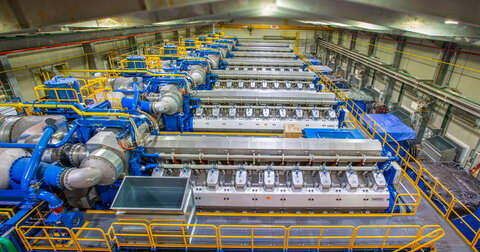
If the state does not change its renewable energy law, the Upper Michigan Energy Resources will have to scrap some RICE generators that it uses to produce electricity but has not yet paid for, Rep. David Prestin, a Republican from Cedar River, told Michigan Capitol Confidential in a phone interview. The company will have to find electricity elsewhere, he added, saying it would likely be more expensive.
CapCon reported on Jan. 14 about local concerns that the 2023 law could mean the end of the company’s RICE generators, which use natural gas. These generators are, under state law, a clean-energy source. Prestin and other Upper Peninsula lawmakers have introduced legislation to let the generators keep running until the end of their projected service life.
RICE generators are crucial to maintaining affordable and reliable energy in the U.P., Prestin told CapCon, because it has limited options for generating electricity and faces higher costs than the Lower Peninsula.
Once state regulators approve an electric company’s plan to switch to other energy sources, the company may then pass its costs along to customers. Without state approval, UMERC will have to pay for converting its operations to other energy sources but be unable to recoup those expenses as they occur, Prestin said.
State regulators have told UMERC to file a new plan by Oct. 15.
UMERC started to accrue new expenses in January, Prestin said, and its customers could be hit with up to two years of expenses all at once, he added.
The utility and its customers will be obligated to pay off the RICE generators until 2049, even if they are unusable.
Cleveland Cliffs, a large employer in the U.P., has said it may cease operations at its open-pit Tilden Mine south of Ishpeming if electricity prices soar, as CapCon previously reported.
The mine employs about 900 people and had a total economic impact of $452 million as of December 2017, according to a 2018 Cleveland Cliffs fact sheet.
A spokesperson for the Michigan Public Service Commission defended its recent decision. “UMERC’s proposed renewable energy plan and associated costs were neither reasonable nor prudent and failed to meet the requirements for approval under state law,” Matt Helms, a public information officer, wrote in an email to CapCon.
UMERC filed a petition for rehearing on Jan. 16.
Michigan Capitol Confidential is the news source produced by the Mackinac Center for Public Policy. Michigan Capitol Confidential reports with a free-market news perspective.
 State probes July power failures
 One of Michigan’s richest communities snags $790k from new state budget
 Republicans introduce bills to change state energy laws