


U.P. leads Michigan in emissions cuts, faces spike in energy costs
2023 energy law forces renewable energy projects across state


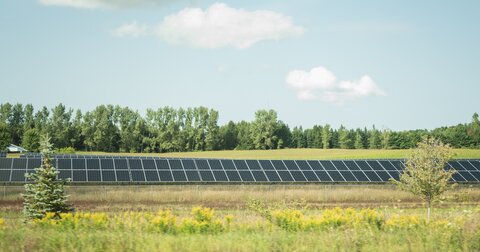
The Upper Peninsula has reduced carbon dioxide emissions more than the Lower Peninsula has, and its reward is that Yoopers now pay higher energy costs, which are likely to increase under state global warming policies.
Michigan Public Act 233 of 2023, enacted by the Democratic trifecta, requires utility companies to get 100% of their power from so-called green energy sources by 2040.
Gov. Whitmer could have exempted the Upper Peninsula’s current form of energy generation from her clean energy law, according to David Stevenson, director of energy and environmental policy at the Mackinac Center for Public Policy. Refusing to do so puts the region on course for a steep hike in energy costs.
“It’s ironic the Upper Peninsula is being targeted for faster decarbonization,” Stevenson told Michigan Capitol Confidential in an email. He noted that the U.P. is paying 27 cents per kilowatt hour, compared to 15 cents per kilowatt hour in Lower Michigan.
Stevenson noted that the U.P. has reduced its CO2 emissions 71% compared to the rest of the state at 52% because of its switch to reciprocating internal combustion engine generators.
But the generators use natural gas, and Whitmer refused to exempt the U.P.’s primary source of energy. Failing to exempt natural gas generators from the climate change law would have a devastating financial impact on the region.
With the addition of the Renegade Solar project, Stevenson added, the utility company that is responsible for the U.P.’s energy production will generate 17% of its power from renewable sources. That will increase to 19% by 2027.
The solar project is a 100-megawatt utility-scale solar generation facility being developed in rural Delta and Marquette counties in Michigan’s Upper Peninsula to comply with Whitmer’s mandates.
The decarbonization efforts have already resulted in the U.P. paying 40% more for electricity than the rest of the state, according to Stevenson.
The Lower Peninsula, in comparison, generates about 13% of its energy from renewable energy sources like wind and solar. It appears to be on track to exceed the state mandate for 15% renewables by 2029.
Stevenson noted that it is more expensive for the Upper Peninsula to add solar because of its rocky terrain. Solar generation in the U.P. will require modules to be held down by ballasts rather than being anchored to the ground.
Stevenson said tariff costs and the end of federal tax credits for solar projects will also drive up the expense of the state-mandated transition.
Michigan Capitol Confidential is the news source produced by the Mackinac Center for Public Policy. Michigan Capitol Confidential reports with a free-market news perspective.
 Ann Arbor installing 4,768 solar panels on city buildings
 37 states have cheaper electricity than Michigan does, report says
 Drive less, use less energy, switch to electric vehicles, says Grand Rapids climate action plan