


SOAR fund would plummet under state Senate bills
Lowell Republican takes aim at program that promised 8,812 jobs and delivered 0


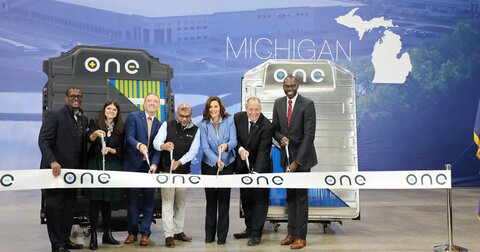
A Michigan lawmaker wants to repeal the Strategic Outreach and Attraction Reserve fund, created in 2021 with the goal of attracting businesses to Michigan.
Sen. Thomas Albert, a Lowell Republican, reintroduced legislation in July to eliminate the Strategic Outreach and Attraction Reserve Fund, calling for dismantling of the Michigan Economic Development Corp.
“We must fundamentally change how we approach economic development in Michigan — because corporate welfare and the MEDC are failing miserably,” Albert said in a statement. “It’s been one disaster after another, and Michigan taxpayers deserve much better.”
Senate bills 486 through 491 would undo SOAR, which started as a $1 billion program in 2021, in Albert’s words, has since “spiraled out of control with no common sense, accountability or return on investment.”
Albert reintroduced the bills shortly before the state’s top law enforcement official called for a pause in funding for the Michigan Economic Development Corporation until the state establishes better oversight over it.
“Each day we learn new things about this agency that lead me to believe that, until there’s better oversight, perhaps they shouldn’t be receiving any state funds at all," Michigan Attorney General Dana Nessel said on WDIV Flashpoint.
Nessel referred to an ongoing investigation into a $20 million grant the economic development agency approved for a politically connected businesswoman who spent $11,000 on a flight and $4,500 on a coffeemaker.
Gov. Gretchen Whitmer signed the SOAR fund, the state’s largest subsidy program, into existence in 2021. The program has spent has spent $670 million in the three years after its inception and has not created any jobs, according to an official report.
Politicians promised that the SOAR would create 8,812 jobs. It has created none.
Albert originally supported SOAR but has voted against funding the program and its escalating project costs since late 2022. In recent years, the Legislature has appropriated $500 million annually to SOAR. Michiganders have received little to nothing to show for that spending, Albert said.
“Projects have either never materialized or, in cases such as the Marshall mega-site, have cost far more than they are ever going to be worth to taxpayers,” Albert said. “SOAR has failed to deliver on its promised quality investments and is a lesson on the failures of big government economic planning. The program is not working as intended and should be scrapped.”
Only one of every 11 jobs promised by Michigan politicians and public officials in business subsidy announcements gets created, according to a study by the Mackinac Center for Public Policy.
The study followed up on two decades of front-page news stories about government grants to private businesses, concluding that these deals rarely meet their state job-creation goals.
Under the bill, all unspent SOAR money would return to the state’s general fund, where it could be used for other purposes, such as road repairs, or returned to taxpayers.
The legislation also would ban elected state and local officials from signing nondisclosure agreements related to economic development projects using public funds.
The Michigan Economic Development Corporation will review the bills, Danielle Emerson, public relations manager, told CapCon in an email.
“The MEDC is in the process of reviewing the legislation. We remain committed to having conversations with our bipartisan partners in the Legislature on the ‘Make it in Michigan’ economic development strategy to ensure we invest in People, cultivate our Places, and support Projects of all sizes who provide family-sustaining wages to Michiganders.”
Michigan has promised $4.7 billion in corporate welfare since 2023 to select, favored companies.
Albert’s legislation also calls for monitoring already approved SOAR projects through the Economic Development Incentive Evaluation Act.
“MEDC has funneled billions of tax dollars to huge corporations, risky startups and politically connected grant recipients without any real accountability in the process — and that’s why there have been so many problems,” Albert said. “We’d be much better off reinvesting some of this money into road repairs and community improvements and using the rest to lower taxes overall so Michigan becomes a more attractive place to live for everyone.”
Michigan Capitol Confidential is the news source produced by the Mackinac Center for Public Policy. Michigan Capitol Confidential reports with a free-market news perspective.
 MEDC, facing embezzlement scandal, refuses to name fired staff