

State Board of Education pushes ‘fair share’ tax for cradle-to-grave public school mandate
Educrats seek control of children as young as four for initiative that would cost taxpayers billions


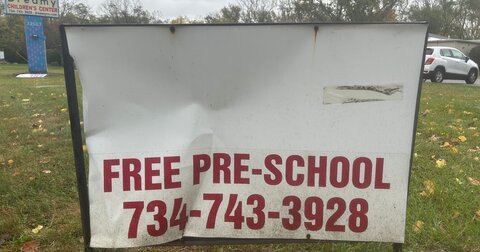
The Michigan State Board of Education declares K-12 education to be underfunded by $4.5 billion in a resolution that it adopted just weeks after school districts got a half-billion-dollar spending increase in the 2025-26 budget. The board hopes to bring Michigan’s most vulnerable residents into a universal preschool initiative that would create the conditions for a massive surcharge on taxpayers.
“The Michigan State Board of Education hereby endorses the Invest in MI Kids proposed amendment to the Michigan Constitution to impose a 5% fair share surcharge on annual taxable income over $1 million for joint filers and over $500,000 for single filers, to raise funds for career and technical education, reducing class size and attracting and retaining educators in public schools across the State,” the board wrote in its Oct. 14 resolution.
The plan to have the Michigan Lifelong Education and Potential agency concoct a universal pre-kindergarten program for four-year-old children, regardless of family income, will only add to education bloat, according to Molly Macek, education policy director at the Mackinac Center for Public Policy. She added that longitudinal studies have shown no positive impact, and potentially negative results, from universal pre-K initiatives.
“Parents who need it already have access to government preschool in Michigan,” said Macek. “The Great Start Readiness Program is far from at-capacity, and yet the state is looking to expand it more.”
The early childhood agency advocates for cradle-to-grave government interventions on the public’s dime.
The roadmap states that currently 49,000 children, or 41% of four-year-olds in the state, are enrolled in a publicly funded preschool program.
Its goal is to enter 75% of preschool-aged children, 88,500, in such programs by 2027 – less than two years from now.
But critics like Macek say MiLEAP’s plan is a waste of money.
It would require, according to Macek, an unprecedented funding increase to expand staff and classrooms so that children from wealthy households could enroll in no-fee preschool.
Macek concluded in a 2024 commentary that the cost of such an endeavor is not worth it, considering that studies show these programs offer little to no long-term academic benefit.
A longitudinal study on Tennessee’s universal pre-K program showed that students fared worse than their counterparts once they entered third grade.
For Michigan to create a universal PreK program it would require, according to MiLEAP’s roadmap:
- At least 1,700 additional lead teachers
- 3,400 more associate teachers
- 1,700 additional classroom spaces, which MiLEAP estimates would cost $107,000 to renovate or create
- Increased administrative and support staff
- More spending on building maintenance and utilities
- More people to handle preschool regulations and programs.
The agency states in its plan that obtaining the desired number of lead teachers means they will need to be the paid the same as K-12 teachers.
The average teacher salary in Michigan is $64,000, according to the Education Policy Innovation Collaborative at Michigan State University.
It would cost taxpayers $110 million to pay the salaries of 1,700 additional lead teachers. Health care, retirement and other benefits would add to that amount.
The state department’s roadmap also notes that the preschool classrooms, especially home-based ones, will still need to abide by day care licensing regulations. This means hiring more teachers and licensing consultants to comply with regulations.
MiLEAP also has plans to offer wrap-around services, including infant and preschool mental health services. It is unclear how much of an increase in funding would be required.
The 2025-26 state budget added a requirement, according to the House Fiscal Agency, that MiLEAP work in collaboration with the Department of Health and Human Services to offer child and infant mental health consultations.
MiLEAP is a new education department created by Gov. Gretchen Whitmer through executive order in 2023.
Michigan Capitol Confidential reported in March 2024 that legislators and the state superintendent were critical of the move.
Michael Rice, who served as superintendent of public instruction until early October, went as far as to ask Attorney General Dana Nessel for an opinion on whether Whitmer’s order that created the second education agency was constitutional.
“Step one: make the state government as big and powerful as possible,” Rep. James DeSana, R-Carolton, wrote at the time. “Step two: raise taxes. Step three: direct all that power and money anywhere but back into the classroom. A plan like that is doomed to fail.”
MiLEAP did not respond to an email seeking comment.
Michigan Capitol Confidential is the news source produced by the Mackinac Center for Public Policy. Michigan Capitol Confidential reports with a free-market news perspective.
 State’s early education plan could shutter private child care
 Michigan spends record amount on schools, gets worse reading scores
 Michigan spends $6.9M advertising 'cost-free' pre-K