


Six-figure salaries increase by 474% at Michigan health department
Payroll surges over 4 years, while errors cost taxpayers millions


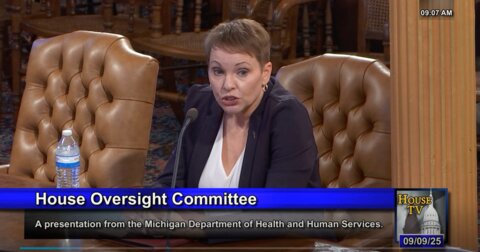
Michigan taxpayers are paying the salaries of more than 4,000 six-figure employees at the state health department, even as the agency’s failures have produced fraud and hundreds of millions in erroneous benefit payments.
The number of high-earners employed by the Michigan Department of Health and Human Services grew from 513 in fiscal year 2020 to 2,944 in fiscal year 2024, an increase of 474%.
The growth of high-earners in the state health department outpaces that of the rest of Michigan’s government. The number of high-end employees in Michigan’s government increased from 6,945 in fiscal year 2020 to 18,647 in fiscal year 2024, an increase of 168%.
The state defines “high earners” as those with annual pay of $80,000 or more. The number of high earners increased among all civil service employees, including the state health department, from fiscal year 2019 to 2024.
The number of state employees earning between $100,000 and $109,000 increased by 2,313, while the number of employees making between $110,000 and $119,000 increased by 1,468. The number of those earning $120,000 to $129,000 jumped by 841 over four years.
“While not shocking given its size and scope, this rate of growth in high-wage roles is faster than proportional when compared to both its share of the workforce and its prior standing,” an analysis prepared by the office of Budget Analysis and Workforce Strategy in August 2025 said of the state health department.
Assuming an average total cost per high-earner employee of $173,000 (salary and benefits), the raises and promotions over the last few years could cost Michigan taxpayers between $2 billion and $795 million annually, according to the document. The state health department used to comprise 7.4% of high-earners in fiscal year 2020 but has doubled to 15.8% in fiscal year 2024, the document said.
While salaries leaped, the state’s welfare fraud doubled from 2023-2024, and the agency ignores vital security upgrades, CapCon reported exclusively. But the state health department continues to shape its work through diversity, equity, and inclusion programs, with plans extending through 2030.
When the state health department learned that it paid $14 million in fraud in 2024 through SNAP, it didn’t fix the problem.
After Michigan Capitol Confidential brought the problem to light, Rep. Jason Woolford, R-Howell, sponsored bills to reduce fraud. The bills, passed and signed into law, take effect on Jan. 1, 2026. Upgrading Bridge Cards to means that the electronic benefit cards will use embedded chips rather than a magnetic stripe. This should save taxpayers more than the $16 million it cost, according to a review of annual fraud for paid by the Michigan Department of Health and Human Services.
Taxpayers in Michigan will pay $415 million this year because the health department struggles to pay benefits accurately. A CapCon investigation found that an employee approved and denied benefits without conducting interviews. Still, it took the state years to fire that worker.
The health department employs over 14,000 people, making it the state’s largest department.
The department prioritizes bureaucratic expansion over efficient service to Michigan families, Woolford told CapCon in an email, and it urgently needs to be restructured into smaller, more accountable segments.
“With a fiscal year 2025 budget exceeding $27 billion, this sprawling agency oversees everything from public assistance and child welfare to environmental health and juvenile justice, employing more than 16,000 full-time equivalents. Yet, as evidenced by a recent document highlighting skyrocketing administrative bloat, the number of high-earning employees (those making $100,000 or more annually) ballooned from 513 in fiscal year 2020 to 2,944 in 2024—a staggering 474% increase. This explosive growth in high-salary positions amid stagnant or strained frontline services underscores how MDHHS's size fosters inefficiency, and misplaced priorities, ultimately failing the very Michiganders it exists to help. Breaking it down would restore focus, cut waste, and ensure resources reach those in need rather than fueling endless expansion.”
The state health department hasn't responded to a request for comment.
Michigan Capitol Confidential is the news source produced by the Mackinac Center for Public Policy. Michigan Capitol Confidential reports with a free-market news perspective.
 Whitmer says SNAP abuse rare; CapCon investigation says otherwise
 Michigan House approves adding chips to SNAP cards
 CapCon reporting on SNAP fraud leads to statewide card upgrade
Jobs agency ghost-writes its own public relations