


Michigan Dems tout green energy benefits, but renewables are just 5% of state's power mix
Dems defend wind and solar


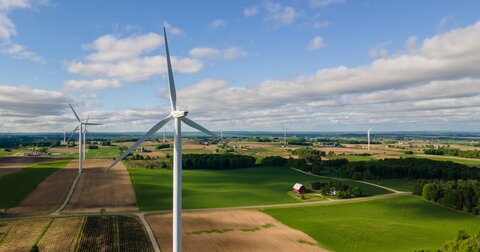
The Michigan House Democrats posted a meme on Facebook criticizing Republicans for not embracing renewable energy.
“Costs across the board are too high, leaving more Michigan families struggling to make ends meet. House Republicans want to roll back clean energy efforts like their counterparts in DC, increasing your costs. Can you say ‘out of touch?’”
The April 27 Facebook meme then stated:
“Michigan Renewable Energy Means:
Less Reliance On Foreign Countries.
Hometown Investments & Lower Costs For You”
Costs across the board are too high, leaving more Michigan families struggling to make ends meet. House Republicans want to roll back clean energy efforts like their counterparts in DC, increasing your costs. Can you say "out of touch?" pic.twitter.com/hSvLTwI9du
— MI House Democrats (@MIHouseDems) April 27, 2026
However, federal data show renewable energy remains a relatively small part of Michigan’s overall energy use and electricity supply.
Across the entire economy—including transportation, heating, and industry—renewable energy accounted for about 5.2% of Michigan’s total energy consumption in 2023, according to the U.S. Energy Information Administration.
Within the electric power sector specifically, renewables made up about 5.6% of the energy used to generate electricity, while natural gas accounted for 41.6%, nuclear power 28.1%, and coal 23%.
The two figures measure different things: the broader consumption number reflects all energy use in the state, while the electric power figure focuses only on fuels used to produce electricity.
Renewable energy provides intermittent energy, which means that solar panels only provide energy when the sun shines and wind turbines only provide energy when the wind blows. However, Michiganders need reliable energy at all times.
The Michigan chapter of Americans for Prosperity said that green energy mandates in the state make energy more expensive and less reliable.
“Michigan families and job creators depend on reliable, affordable electricity,” AFP-Michigan spokeswoman Billie Rajzer said. “Yet today, rising energy costs, increasing demand from new industries, and policies that restrict competition are placing growing pressure on Michiganders. Mandated renewable energy requirements in Michigan are falling short, and continued support for them shows that Michigan House Democrats are the ones out of touch.”
Nationwide, renewable energy has received significantly more federal subsidies in recent years than other forms of energy.
The latest comprehensive federal accounting of energy subsidies comes from the U.S. Energy Information Administration, which analyzed federal support in fiscal year 2022.
That report found the federal government provided about $15.6 billion in subsidies to renewable energy, compared with roughly $3.2 billion for fossil fuels.
However, the Inflation Reduction Act was signed into law on Aug. 16, 2022—just weeks before the fiscal year ended on Sept. 30. Because the EIA report measures subsidies actually paid out during that period, it captures little to none of the law’s funding.
Most of the law’s incentives—estimated at roughly $370 billion initially and potentially far higher over time—did not begin flowing until 2023 and beyond. As a result, the EIA report effectively reflects a pre-IRA baseline rather than current subsidy levels.
Michigan Capitol Confidential is the news source produced by the Mackinac Center for Public Policy. Michigan Capitol Confidential reports with a free-market news perspective.
 Coal’s comeback: Report says old plants could power AI boom
 37 states have cheaper electricity than Michigan does, report says
 U.P. leads Michigan in emissions cuts, faces spike in energy costs