


Whitmer’s energy emergency order stretches her authority
Governor cites high gas prices in order to suspend vapor pressure requirements


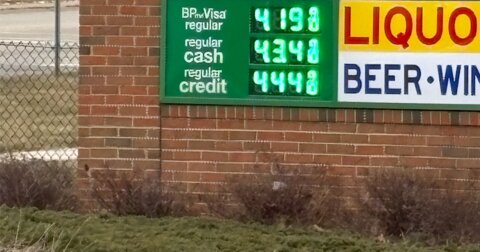
Gov. Gretchen Whitmer exceeded her executive authority with an April 2 emergency order on gasoline prices, according to an expert on separation of powers in Michigan government.
The emergency order temporarily suspends state-level requirements on Reid vapor pressure — used to reduce the amount of ozone created from gasoline — for gasoline sold in Michigan. The suspension aligns with an earlier waiver from the U.S. Environmental Protection Agency.
Whitmer noted in her order that fuel prices have increased by 30% since the start of the Iran war.
“Michigan families, already facing rising prices due to inflation and tariffs, now have to pay more to get to work and school, while businesses must absorb higher costs to operate,” the governor wrote. “By expanding the fuel supply available for distribution, this action will help alleviate upward pressure on prices.”
But the spike in oil prices does not justify an emergency order, Michael Van Beek, director of research at the Mackinac Center for Public Policy.
“Whitmer is stretching the limits of her emergency powers, just as she did during the COVID-19 pandemic,” he wrote.
Michigan’s energy emergency law allows the governor to take emergency action in response to “danger to the health, safety, or welfare of the citizens of this state due to an impending or present energy shortage,” which the law defines as a lack of adequate energy resources.
“The governor’s executive order declaring the emergency makes no mention of a threat to the supply of gasoline in Michigan; it only references relatively high gas prices,” Van Beek wrote. “That is not the same thing as an energy shortage.”
Van Beek cited 2022 gas prices, which exceeded $3.89 per gallon. Whitmer did not issue an order then, and she vetoed a bill that would have suspended a 27.2-cent gasoline tax.
High gasoline prices are not new to Michiganders. Michigan Capitol Confidential reported in 2025 that residents pay some of the highest gas taxes in the nation. During the 2022 price hike, the state maintained both its per-gallon excise tax and a percentage-based sales tax on gasoline.
Whitmer has taken steps in the past to raise gasoline taxes. One of her first acts as governor was to propose a 45-cent per gallon tax hike. The Legislature did not approve that increase.
Whitmer did not respond to an email seeking comment.
Michigan Capitol Confidential is the news source produced by the Mackinac Center for Public Policy. Michigan Capitol Confidential reports with a free-market news perspective.
 New report shows Democratic-led states have substantially higher gas prices
 Clean fuel proposal would drive up gas prices 34 cents per gallon by 2035
 Michigan’s fleet vehicles used 6.8 million gallons of fuel to travel 117 million miles in fiscal year 2025